AI and Emotional Intelligence: Beyond EQ Test Reports to Sustainable Growth
You’ve just completed an EQ test and received your score. It’s an insightful moment—a snapshot of your current emotional landscape. But a crucial question quickly follows: "Now what?" While knowing your score is a great first step, true growth lies in turning that data into action. This is where the power of modern technology can make a profound difference.
This article explores how artificial intelligence is revolutionizing emotional intelligence development. We'll look at how AI-powered tools, like the advanced reports available after our EQ test, can act as your personal coach. They help transform a simple assessment into a clear, actionable roadmap for sustainable growth. Ready to see how AI can unlock your emotional potential? Start your EQ test to get your baseline score and discover the next step.
AI's Role in Emotional Intelligence Development
Artificial intelligence is no longer just for complex data analysis or automating tasks. It's now a powerful ally in the very human journey of self-improvement. When applied to emotional intelligence (EQ), AI moves beyond basic scoring to provide deep, personalized insights that were once only available through one-on-one coaching. It acts as a mirror, showing you patterns you might not see yourself.
This technology helps bridge the gap between knowing you need to improve your empathy or self-regulation and knowing how to do it. By analyzing your responses to situational questions, AI can pinpoint specific triggers and behavioral tendencies. This offers a much clearer picture of your emotional world and provides the foundation for creating a truly effective development plan.
The Science Behind AI-Driven EQ Coaching
The concept of AI-driven EQ coaching is grounded in proven psychological principles and advanced machine learning. Traditional EQ assessments, based on models like Daniel Goleman's five pillars (self-awareness, self-regulation, motivation, empathy, and social skills), provide a solid framework. AI enhances this by adding a layer of dynamic, personalized analysis.
Here’s how it works: An AI model is trained on vast datasets of human emotional responses and psychological profiles. When you complete an assessment, the AI doesn’t just tally your score. It analyzes the nuances in your answers, identifies interconnected patterns, and compares them to established benchmarks for high emotional intelligence. The result is not just a number, but a narrative—a story about your unique emotional strengths and challenges. This science-backed approach makes AI one of the most exciting emotional intelligence training tools available today.
How EQ Test Reports Create Personalized Learning Pathways
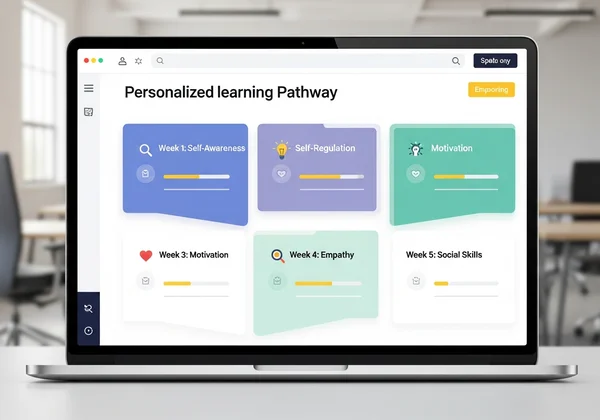
A standard EQ test report tells you what your score is. An AI-powered report tells you why it is what it is and how to improve it. This is the key to achieving EQ growth beyond the test itself. Instead of generic advice, AI generates a personalized learning pathway tailored to your specific results.
For example, if your report indicates a challenge with empathy, it won’t just say "be more empathetic." It might identify that you struggle specifically with recognizing non-verbal cues in high-stress situations. Your personalized pathway could then include:
- Targeted Exercises: Suggesting specific practices, like observing interactions in movies with the sound off to focus on body language.
- Scenario Simulations: Presenting hypothetical workplace conflicts and guiding you through empathetic responses.
- Progress Tracking: Helping you monitor your improvement over time as you apply these new skills.
This level of customization turns your test results from a static piece of information into the starting point of a dynamic, guided journey.
Practical AI-Enhanced EQ Growth Strategies
Understanding AI's potential is one thing; applying it is another. The real value of AI in emotional intelligence development comes through practical application. It provides structured strategies you can use daily. An AI-powered report acts as your guide, breaking down the complex goal of 'improving EQ' into manageable weekly steps.
This structured approach helps you build momentum and see real progress. Instead of feeling overwhelmed, you have a clear framework to follow. It’s about creating small, consistent habits that lead to significant, lasting change in how you understand and manage your emotions.
The 4-Week EQ Development Framework
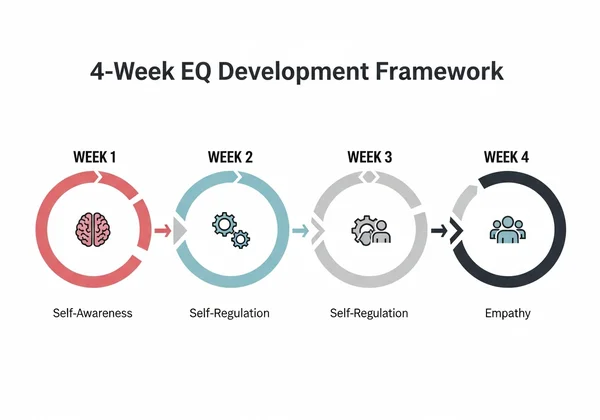
Imagine starting a personalized 4-week journey to enhance your emotional skills. Based on your unique EQ profile from an AI-powered assessment, a structured framework might look something like this:
- Week 1: Deepening Self-Awareness. The AI report highlights your primary emotional triggers. Your goal this week is to simply observe and journal when these triggers appear, without judgment. The AI might provide prompts like, "Notice how you feel when you receive unexpected feedback."
- Week 2: Practicing Self-Regulation. Building on Week 1, you now focus on managing your reactions. The AI might suggest a specific technique, such as the "pause and plan" method, to use when you feel a strong emotional response.
- Week 3: Cultivating Empathy. Your focus shifts outward. The AI provides scenarios to help you practice perspective-taking. For instance, it might ask you to re-read a difficult email and consider the sender's possible motivations and feelings.
- Week 4: Enhancing Social Skills. This week is about application. Using the insights from the previous weeks, you practice a specific social skill, like active listening or giving constructive feedback, in a low-stakes environment.
This framework provides the structure needed for real habit formation, turning abstract goals into concrete weekly actions.
Using AI Feedback to Identify Blind Spots
One of the most powerful aspects of AI-driven feedback is its objectivity. We all have emotional blind spots—areas where our perception of ourselves doesn't match how others see us. AI can help illuminate these areas with impartial, data-driven insights.
For example, you might believe you are a direct and efficient communicator. However, an AI analysis of your responses could reveal a pattern of communication that others may perceive as blunt or dismissive, impacting your relationships. The report can then provide specific examples and suggest alternative phrasing to help you communicate more effectively without sacrificing clarity. This kind of targeted feedback is invaluable for personal and professional growth, helping you see yourself more clearly and build stronger connections.
Understanding AI's Limitations in Emotional Intelligence Growth
While AI is a transformative tool for EQ development, it's essential to recognize its limitations. Technology can provide incredible insights, structure, and personalized guidance, but it is not a complete replacement for human experience and connection. Trustworthiness in any self-development tool requires acknowledging what it can and cannot do.
AI is a powerful assistant, a coach, and a guide. However, emotional intelligence is ultimately lived and practiced in the real world with real people. Understanding the balance between leveraging technology and engaging in genuine human interaction is key to holistic and sustainable growth.
Why Human Connection Remains Essential
Emotional intelligence is fundamentally about connection—with yourself and with others. An AI can teach you the principles of empathy, but it cannot replicate the feeling of a genuine, heartfelt conversation. It can simulate a difficult discussion, but it cannot replace the experience of navigating one with a colleague or loved one.
Human interaction is messy and unpredictable. It's rich with nuances that even the most advanced algorithms cannot fully capture. The true test of your EQ is not in a simulation, but in how you comfort a friend, lead a team through uncertainty, or resolve a conflict with your partner. AI provides the map and the training, but you must still navigate the terrain of real relationships.
Complementing AI Insights with Real-World Practice
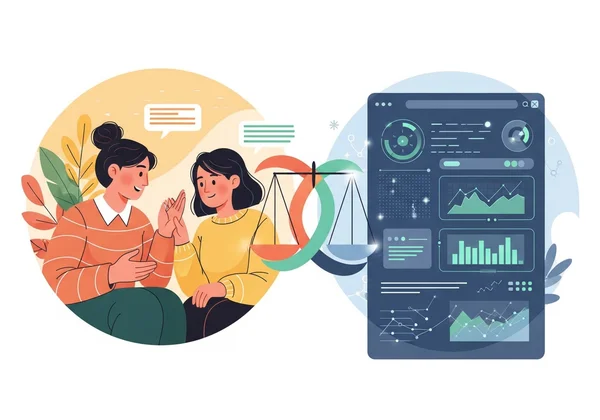
The most effective way to use AI for EQ growth is to see it as a powerful supplement to, not a substitute for, real-world experience. Your AI-powered report is your personal playbook. The world is your practice field.
Here’s how to create a powerful synergy:
- Learn with AI: Use your personalized report from the EQ assessment to understand your strengths and identify specific areas for improvement.
- Practice with People: Actively look for opportunities to apply what you've learned. If you're working on active listening, make a conscious effort in your next team meeting.
- Reflect and Refine: After a social interaction, reflect on how it went. Compare your experience to the insights from your AI report. Did you manage your triggers as planned? What could you do differently next time?
By combining AI's data-driven guidance with mindful, real-world practice, you create a virtuous cycle of learning and growth that leads to true emotional mastery.
Your Journey from Assessment to Emotional Mastery
Think of your EQ test score not as a final verdict, but as a roadmap showing where you are and where you can grow. While a number gives you a valuable baseline, the path to sustainable growth is paved with personalized insights, actionable strategies, and consistent practice. Modern AI technology serves as a powerful catalyst in this process, turning a simple assessment into a dynamic roadmap for development.
By leveraging AI-powered reports, you can go beyond the "what" and understand the "why" behind your emotional patterns. You gain a personal coach that helps you build self-awareness, regulate your responses, and strengthen your connections with others. The journey from assessment to emotional mastery is within your reach.
Your next step is clear. Discover your unique emotional profile and unlock the personalized insights that will guide your growth. Take our free EQ test today and begin your journey toward a more emotionally intelligent you.
The Takeaway
Can AI really teach emotional intelligence effectively?
Yes, AI can be a highly effective tool for teaching emotional intelligence. While it doesn't replace human interaction, it provides personalized, scalable, and objective feedback. AI-driven platforms can identify specific behavioral patterns, suggest targeted exercises, and create structured learning paths that help users build foundational EQ skills in a private, self-paced environment.
How does AI differ from traditional EQ coaching methods?
Traditional EQ coaching relies on the expertise and intuition of a human coach. It is deeply personal but can be expensive and time-consuming. AI coaching, on the other hand, is data-driven, instantly accessible, and highly scalable. It can analyze patterns from your assessment with perfect objectivity. The best approach often combines the two: using AI insights from a platform like the Eqtest.co report to make in-person coaching or self-directed practice even more effective.
What are the limitations of AI in emotional intelligence development?
The primary limitation is that AI cannot replicate genuine human emotion or connection. It analyzes data patterns but does not "feel" empathy. It is a simulation and guidance tool. Therefore, skills learned through AI must be applied and honed in real-world social interactions to achieve true mastery and build meaningful relationships.
How can I integrate AI EQ insights into my daily routine?
Start small. Choose one specific insight from your AI-powered report to focus on for a week. For example, if the report highlights a tendency to interrupt others, make it your goal to practice pausing for three seconds before speaking in every conversation. Set a daily reminder on your phone. This micro-habit approach, guided by your report, makes integrating insights manageable and sustainable.