Best Emotional Intelligence Books – Essential Reads for Every Level
Emotional intelligence shapes how you handle stress, connect with others, and make decisions every day. Yet with so many emotional intelligence books on the shelves, choosing the right one can feel overwhelming. Should you start with Daniel Goleman's groundbreaking classic, or does a newer title like Emotional Intelligence 2.0 better suit your goals? This guide gives you a curated list of the best emotional intelligence books — organized by level, audience, and purpose — along with key takeaways you can put into practice today. If you want to explore where your emotional intelligence stands, you can take a free EQ self-assessment as a starting point.

What Is Emotional Intelligence and Why Should You Care?
Before you explore the best emotional intelligence books, it helps to understand what emotional intelligence actually means — and why it may matter far more than you think.
Emotional intelligence, often called EQ, refers to your ability to recognize, understand, and manage emotions in yourself and others. Daniel Goleman popularized the concept in his landmark emotional intelligence book, and it has since become a foundational topic in psychology, education, and business.
The Five Core Components of Emotional Intelligence
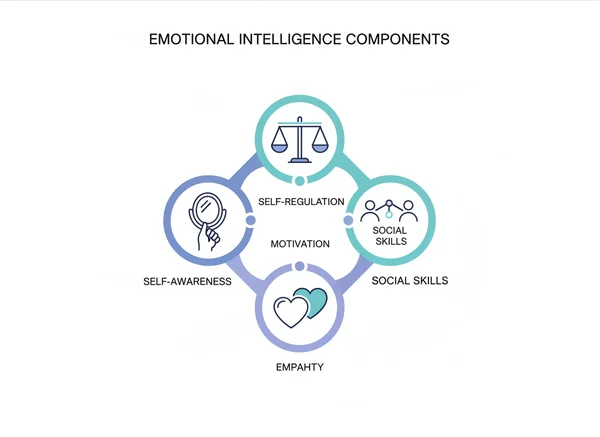
Most emotional intelligence books build on five key dimensions:
- Self-awareness — Recognizing your emotions and understanding how they influence your thoughts and behavior.
- Self-regulation — Managing impulsive reactions and adapting to changing circumstances.
- Motivation — Drawing on inner drive to pursue goals with energy and persistence.
- Empathy — Understanding what others feel and responding with care.
- Social skills — Building strong relationships, communicating clearly, and navigating conflict.
These five areas form the backbone of nearly every emotional intelligence book on this list.
EQ vs. IQ — Why Emotional Skills Often Matter More
IQ measures cognitive ability — essentially, how well you solve abstract problems. EQ measures how well you navigate emotions and relationships. Research consistently suggests that emotional intelligence plays a larger role in leadership effectiveness, teamwork, and personal well-being than raw intellect alone.
In other words, you can be brilliant on paper and still struggle in conversations, under pressure, or in close relationships. That is exactly why so many readers turn to books on emotional intelligence for practical guidance.
Top Emotional Intelligence Books Every Reader Should Know
Here are seven standout emotional intelligence books, each offering a unique perspective on how to understand and develop your EQ.
Emotional Intelligence by Daniel Goleman — The Book That Started It All
Daniel Goleman's emotional intelligence book is the title that brought EQ into mainstream awareness. Published in 1995, it argues that emotional intelligence can matter more than IQ for both personal and professional success. Goleman breaks down the five core components and explores how they shape everything from parenting to leadership.
Best for: Anyone seeking a foundational understanding of emotional intelligence. Key takeaway: Emotional skills are not fixed — they can be developed and strengthened at any stage of life.
Emotional Intelligence 2.0 by Travis Bradberry and Jean Greaves
This emotional intelligence book takes a hands-on approach. Rather than focusing on theory, Emotional Intelligence 2.0 provides 66 specific strategies to improve your EQ across four core skill areas. It also includes access to an online self-assessment that helps you pinpoint your strongest and weakest emotional skills.
Best for: Readers who want a practical, action-oriented guide with built-in exercises. Key takeaway: Small daily habits — like pausing before reacting — can measurably boost your emotional intelligence over time.
Working with Emotional Intelligence by Daniel Goleman
Goleman's follow-up book applies emotional intelligence directly to the workplace. It examines how EQ influences job performance, leadership, and team dynamics. If you are curious about the link between emotional intelligence and career success, this is a must-read.
Best for: Professionals and managers who want to leverage EQ at work. Key takeaway: The skills that set top performers apart tend to be emotional, not technical.

The EQ Edge by Steven Stein and Howard Book
This book dives deep into the science behind emotional intelligence assessments. It connects EQ to specific life outcomes — career progression, relationships, physical health, and overall happiness — and offers growth strategies for each area.
Best for: Readers who appreciate data-driven insights and structured improvement plans. Key takeaway: Even modest gains in specific EQ areas can create meaningful changes in your daily life.
Primal Leadership by Daniel Goleman, Richard Boyatzis, and Annie McKee
Primal Leadership examines how emotional intelligence shapes leadership effectiveness. The authors introduce "resonant leadership" — the idea that a leader's emotional tone sets the mood for an entire organization. This remains one of the best emotional intelligence books for anyone in a management role.
Best for: Leaders, executives, and team managers. Key takeaway: Emotionally intelligent leaders create environments where people consistently perform at their best.
Permission to Feel by Marc Brackett
Marc Brackett, director of the Yale Center for Emotional Intelligence, makes a compelling case for emotional literacy. Permission to Feel introduces the RULER framework — a method for recognizing, understanding, labeling, expressing, and regulating emotions. It stands as one of the most accessible emotional intelligence books for both personal and professional growth.
Best for: Educators, parents, and anyone who wants a fresh, research-backed approach to emotions. Key takeaway: Naming your emotions accurately is the first step toward managing them well.
Emotional Intelligence Habits by Travis Bradberry
Building on the foundation of Emotional Intelligence 2.0, this book focuses on turning EQ skills into lasting habits. Bradberry explores how emotionally intelligent people handle conflict, build trust, and stay resilient under pressure.
Best for: Readers who have explored EQ basics and want to deepen their practice. Key takeaway: Emotional intelligence is not something you learn once — it is a set of habits you practice every day.
Best Emotional Intelligence Books for Specific Goals
Not every emotional intelligence book serves the same purpose. Below is a quick guide to matching your reading to your specific situation.
Best Emotional Intelligence Books for Beginners
If you are new to the topic, start with Daniel Goleman's original emotional intelligence book or Emotional Intelligence 2.0. Both cover core concepts clearly and require no background in psychology. Permission to Feel is another excellent entry point — its conversational style makes complex ideas easy to absorb.
Best Emotional Intelligence Books for Leaders and Managers
For leadership-focused readers, Primal Leadership and Working with Emotional Intelligence are top choices. These books connect EQ directly to management challenges like motivating teams, navigating difficult conversations, and building trust. The EQ Edge also includes workplace-specific strategies.
Best Emotional Intelligence Books for Relationships
If improving personal relationships is your primary motivation, look for books that emphasize empathy and emotional regulation. Permission to Feel is especially strong here. Emotional Intelligence 2.0 also offers practical exercises for strengthening how you connect with the people in your life.
Best Emotional Intelligence Books for the Workplace
For workplace growth, Working with Emotional Intelligence and Emotional Intelligence Habits both provide detailed strategies for professional settings. They help you navigate office dynamics, communicate more effectively, and develop the kind of self-awareness that supports career advancement.
How to Choose the Right Emotional Intelligence Book for You
With so many strong options, selecting the right emotional intelligence book comes down to two main considerations.
Match Your Reading Style — Theory vs. Practical Exercises
Some emotional intelligence books, like Goleman's original, focus on explaining what EQ is and why it matters. Others, like Emotional Intelligence 2.0, jump straight into strategies and exercises. Think about what you need most. If you are building a foundation, start with theory. If you are ready to act, pick a practical guide.
Consider Your Current EQ Strengths and Growth Areas
Reflect on which of the five EQ components feels most natural to you — and which ones present the biggest opportunity for growth. For instance, if empathy comes easily but self-regulation is a challenge, a book focused on emotional habits may be your best fit. A quick EQ self-assessment online can help you identify which areas deserve your attention first.

Can Reading Books Actually Improve Your Emotional Intelligence?
This is one of the most common questions readers ask — and the answer is encouraging. Yes, reading about emotional intelligence can genuinely help. However, it works best when paired with consistent practice and honest self-reflection.
Why Knowledge Is Only the First Step
Understanding the five components of emotional intelligence is valuable. However, knowledge alone will not change how you respond under stress or navigate conflict. Real growth happens when you take what you have read and apply it in everyday moments — difficult conversations, high-pressure decisions, and small daily interactions.
Practical Ways to Apply What You Read Every Day
Here are a few strategies that turn book knowledge into real EQ growth:
- Pause before responding. When you feel a strong emotion, give yourself a few seconds before reacting. This builds self-regulation.
- Name what you are feeling. Practice labeling emotions accurately — say "frustrated" instead of just "stressed." This strengthens self-awareness.
- Ask one empathetic question daily. In conversations, try asking "How did that make you feel?" This naturally builds empathy.
- Reflect at the end of each day. Spend two minutes thinking about one emotional moment — what went well and what you would handle differently.
How a Self-Assessment Complements Your Reading Journey
Books provide concepts and strategies. A self-assessment offers a snapshot of where you stand today. Together, they create a feedback loop — read, reflect, measure, and grow. If you are looking for a starting point, discover your EQ strengths with a free assessment designed for self-reflection and personal insight.
This assessment is designed for self-reflection and personal growth — it is not a diagnostic tool and does not replace professional evaluation.
Key Takeaways for Building Your Emotional Intelligence Library
Choosing the right emotional intelligence book depends on your goals, experience level, and reading style. Here is a quick summary to guide your decision:
- Start with the classics if you want a strong foundation — Daniel Goleman's emotional intelligence book remains the gold standard.
- Go practical if you want immediate action steps — Emotional Intelligence 2.0 and Emotional Intelligence Habits deliver targeted exercises.
- Match your book to your goal — leaders, beginners, and relationship-builders each have tailored options on this list.
- Practice what you read — knowledge becomes emotional intelligence only through daily application.
- Pair reading with self-reflection — an EQ assessment helps you track progress and spot areas for growth.
The best emotional intelligence book is the one you actually read and put into practice. Pick one that speaks to your current needs, commit to applying its lessons, and notice how your relationships and self-awareness begin to shift. Ready for a helpful next step? Explore a free EQ assessment at Eqtest.co and see where your emotional intelligence journey leads.
Frequently Asked Questions
What is the best emotional intelligence book for beginners?
For beginners, Daniel Goleman's Emotional Intelligence and Emotional Intelligence 2.0 by Travis Bradberry are both excellent starting points. Goleman covers the foundational theory, while Bradberry provides practical strategies you can apply right away.
Is Emotional Intelligence by Daniel Goleman worth reading?
Yes. Goleman's emotional intelligence book remains one of the most influential works in the field. It offers a thorough introduction to EQ and explains why emotional skills may matter as much as — or more than — cognitive ability.
What does Emotional Intelligence 2.0 teach?
Emotional Intelligence 2.0 covers four core EQ skills — self-awareness, self-management, social awareness, and relationship management. It includes 66 actionable strategies along with access to an online EQ assessment.
Is emotional intelligence a skill or a fixed trait?
Emotional intelligence is widely considered a developable skill. While some people may have a natural inclination, research suggests that EQ can be strengthened through practice, self-reflection, and targeted learning over time.
What are the five components of emotional intelligence?
The five components are self-awareness, self-regulation, motivation, empathy, and social skills. Daniel Goleman outlined these in his original work, and they form the framework used in most emotional intelligence books today.
Are there good audiobook versions of emotional intelligence books?
Yes. Many popular titles — including Goleman's original, Emotional Intelligence 2.0, and Permission to Feel — are available as audiobooks through platforms like Audible.
What are the best emotional intelligence books for leaders?
For leaders, Primal Leadership by Goleman, Boyatzis, and McKee is a top recommendation. Working with Emotional Intelligence and The EQ Edge also offer leadership-focused insights and practical strategies for managing teams effectively.