EQ Test for Relationships: Shape Love & Friendships
Ever wonder why some conversations with loved ones flow effortlessly, while others end in misunderstanding and frustration? Or why you connect deeply with some friends, yet struggle to maintain other bonds? The quality of our relationships often feels like a mystery, but much of it comes down to a specific set of skills.
This skill set is called emotional intelligence, or EQ. It’s the ability to understand your own emotions and the emotions of others, and to use that awareness to manage your behavior and relationships effectively. High EQ is the secret ingredient behind the strongest, healthiest, and most fulfilling connections.
But how do you know where you stand? This guide will explore exactly how emotional intelligence shapes your closest bonds—from romantic partnerships to lifelong friendships. More importantly, it will show you how an EQ test can act as a personal map, revealing your strengths and guiding you toward more meaningful connections. The first step is understanding your unique emotional patterns, and a scientifically-backed EQ test can provide the clarity you need to begin.

Understanding Emotional Intelligence in Your Relationships
At its core, emotional intelligence in relationships isn't about being "nice" all the time or suppressing your feelings. It's about navigating the complex world of human connection with awareness and skill. It means you can recognize when your partner is stressed without them saying a word, or you can express your own disappointment without starting a fight.
You can develop this ability—no innate talent required. It's a collection of skills that can be learned and improved. By understanding its key components, you can begin to see your relationships in a whole new light.
The 5 Pillars of Relationship EQ: Self-Awareness to Social Skills
Emotional intelligence is built on five core pillars. When you apply them to your relationships, they become a powerful framework for building trust, intimacy, and resilience.
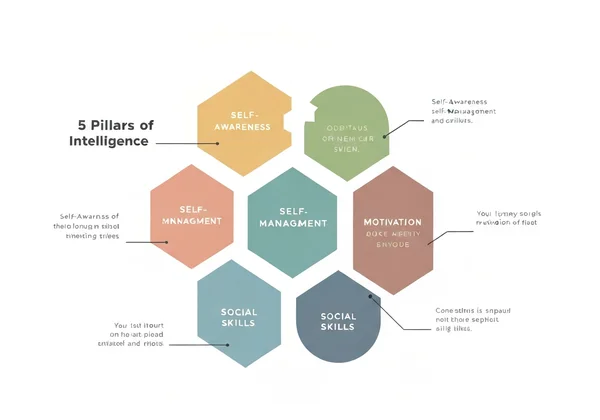
- Self-Awareness: This is the foundation. It’s the ability to recognize your own emotions as they happen and understand your tendencies. In a relationship, this means knowing your triggers. For example, you know that you feel defensive when you perceive criticism, which allows you to manage that reaction instead of letting it control you. Improve self-awareness with our free EQ test.
- Self-Management: Once you are aware of your emotions, the next step is managing them. This isn’t about bottling feelings up; it’s about expressing them in healthy and productive ways. It’s the difference between lashing out in anger and calmly saying, “I feel hurt by what you said, and I need to understand why you said it.”
- Motivation: This pillar relates to your inner drive to achieve goals with optimism and persistence. In relationships, it’s the commitment to work through challenges rather than giving up when things get tough. It's the resilience that helps you and your partner weather life’s inevitable storms together.
- Empathy: Empathy is the ability to understand and share the feelings of another person. It’s about truly listening to your friend and understanding their perspective, even if you don’t agree with it. It’s what allows you to offer genuine comfort and support, making the other person feel seen and valued.
- Social Skills: This pillar brings everything together. It involves all the skills needed to manage relationships well, from clear communication and active listening to conflict resolution and collaboration. It's your ability to build rapport, navigate disagreements constructively, and inspire trust.
High vs. Low EQ in Relationships: Spotting Key Differences
The difference between high and low EQ becomes incredibly clear in our daily interactions. Recognizing these patterns in yourself and others is the first step toward positive change.
Someone with high emotional intelligence in a relationship tends to:
- Listen more than they speak, seeking to understand first.
- Express their feelings and needs clearly and respectfully.
- Handle disagreements as a problem to be solved together, not a battle to be won.
- Validate their partner’s or friend’s feelings, even when they have a different opinion.
- Take responsibility for their actions and apologize sincerely when they are wrong.
In contrast, someone with low emotional intelligence may:
- Interrupt frequently or seem distracted during important conversations.
- Struggle to name their emotions, often resorting to anger or withdrawal.
- Blame others for problems and have difficulty seeing their own role in conflicts.
- Dismiss others’ feelings with phrases like “you’re just being too sensitive” or “it’s not a big deal.”
- Avoid difficult conversations entirely or let resentment build up over time.
Seeing these patterns isn’t about judging yourself or others. It’s about gaining awareness. Once you see the patterns, you gain the power to change them.
Why an EQ Test is Your Compass for Relationship Growth
Understanding the theory of emotional intelligence is one thing, but applying it to your own life is another. It's hard to know where to start improving without a clear picture of your current strengths and weaknesses. This is where a well-designed EQ test becomes an essential tool.
Think of it as a compass. You can't chart a course to a new destination without first knowing where you are. An EQ test gives you that starting point—an objective look at your emotional landscape, free from personal bias.
Identifying Your Unique Strengths & Challenges in Connection
We all have a unique emotional profile. You might be naturally gifted at empathy but struggle with managing your own stress. Or perhaps you're excellent at self-motivation but have a blind spot when it comes to reading social cues.
A credible EQ test ends guesswork. Quality assessments go beyond generic scores—they give nuanced insights into your strengths. It can highlight your hidden strengths—the relationship skills you can lean on—and pinpoint the specific areas that need your attention. This personalized feedback is the key to effective growth. This is where a free emotional intelligence test becomes invaluable, offering a clear baseline for your journey.

Beyond the Score: Translating Your EQ Results into Better Bonds
Receiving your EQ score is not the finish line; it's the starting gate. The real value lies in what you do with that information. The results are not a label of "good" or "bad" but a roadmap for targeted self-improvement.
For example, if your results suggest a challenge with self-management, you now have a clear goal: to learn techniques for pausing before you react in tense situations. If empathy is an area for growth, you can consciously practice active listening in your next conversation.
Your results empower focused action. They turn 'improve my relationships' from abstract to concrete. Now, you can build stronger bonds—one skill at a time.
Actionable Strategies to Improve Your Relationship EQ
The best news about emotional intelligence is that it is not fixed. It is a set of flexible skills that can be developed with conscious effort and practice. Once you’ve identified your areas for growth, you can start implementing simple, powerful strategies in your daily life.
Cultivating Empathy & Active Listening for Deeper Connections
Empathy is the bedrock of connection. It's the feeling of being truly understood by another person. You can actively build this skill with a few key practices.
- Practice Active Listening: The next time a loved one is talking, resist the urge to plan your response. Instead, focus completely on their words, tone, and body language. When they finish, summarize what you heard by saying, "So, if I'm understanding you correctly, you're feeling..." This simple act validates their experience and ensures you truly understand their message.
- Ask Open-Ended Questions: Instead of questions that can be answered with "yes" or "no," ask questions that invite deeper sharing. For instance, instead of "Did you have a good day?" try "What was the most interesting part of your day?"
- Put Yourself in Their Shoes: Before reacting to a situation, take a moment to consider the other person’s perspective. What might they be thinking or feeling? What experiences might be shaping their reaction? This brief pause can prevent misunderstanding and foster compassion.
Managing Conflict & Fostering Resilience in Your Relationships
Disagreements are a natural part of any relationship. High EQ doesn't eliminate conflict, but it changes how you navigate it. The goal is to resolve issues in a way that strengthens the bond rather than damaging it. Try our conflict resolution EQ guide for more strategies.

- Use "I" Statements: Frame your concerns around your own feelings rather than blaming the other person. Saying "I feel overlooked when plans change without me" is far more constructive than "You never include me." It invites conversation instead of defensiveness.
- Know When to Pause: If a discussion becomes too heated, it’s okay to take a break. Agree to step away and cool down before revisiting the issue. A simple "I'm feeling too upset to talk about this productively right now. Can we come back to this in an hour?" can save you both from saying things you'll regret.
- Focus on the Problem, Not the Person: Address the specific issue at hand without resorting to personal attacks or bringing up past grievances. Work together to find a solution that meets both of your needs, reinforcing that you are a team.
Your Journey to More Harmonious & Fulfilling Relationships Starts Here
Your relationships are among the most important aspects of your life. Nurturing them requires more than just good intentions; it requires skill, awareness, and a willingness to grow. Emotional intelligence is that skill.
By understanding the five pillars of EQ, recognizing how emotional patterns play out, and taking actionable steps to improve, you can transform the way you connect with others. It all begins with a single, powerful step: self-awareness. An EQ test provides the clear, objective insight you need to understand your unique emotional profile and begin your journey.
Want to see how your EQ shapes your relationships? Take our free test in 5 minutes.
Frequently Asked Questions About EQ & Relationships
What is an EQ test, and how does it relate to personal relationships?
An EQ test is an assessment designed to measure various aspects of your emotional intelligence, such as self-awareness, empathy, and social skills. In relationships, it acts as a diagnostic tool, helping you understand how your emotional habits impact your connections with others. It can reveal your strengths in communication and your blind spots in conflict, providing a clear starting point for improvement.
Can I take a free and accurate EQ test to assess my relationship skills?
Yes, absolutely. High-quality, scientifically-backed assessments are available that can give you valuable insights without any cost. At Eqtest.co, we offer a free EQ test designed to provide a reliable snapshot of your emotional intelligence. You can test your EQ in just a few minutes and get instant results to begin understanding your relationship skills better.
What are the common signs of high emotional intelligence in a partner or friend?
A person with high EQ in a relationship often shows several key behaviors. They are typically excellent listeners who make you feel heard. They can name their own feelings and are comfortable discussing emotions. They handle stress and conflict constructively, apologize sincerely, and respect your boundaries. Above all, they demonstrate empathy, making a genuine effort to understand your perspective.
Is it possible to improve my EQ for better relationships?
Yes, it is entirely possible. Unlike IQ, which is relatively stable, emotional intelligence is a set of skills that can be learned, practiced, and strengthened over time. By becoming more aware of your emotions, practicing active listening, and learning healthier ways to manage conflict, you can significantly raise your EQ and, in turn, dramatically improve the quality of your relationships.