EQ Test for Workplace Success: Your Ultimate Guide to Emotional Intelligence
In today's fast-paced professional landscape, technical skills and a high IQ are no longer the sole predictors of success. There's a deeper, more influential factor at play: emotional intelligence at work. This crucial skill set determines how we manage our behavior, navigate social complexities, and make personal decisions that achieve positive results. Are you truly leveraging the single most powerful skill for your career advancement?
In this guide, we'll explore why emotional intelligence (EQ) is the ultimate asset for your professional journey. We'll break down its core components, reveal practical strategies to cultivate it, and show you how a clear understanding of your own EQ can unlock unprecedented career growth. The first step to mastery is measurement, and you can discover your EQ with a scientifically validated assessment.
Why Emotional Intelligence Drives Unprecedented Career Success
While intelligence gets you in the door, emotional intelligence is what helps you climb the ladder. It's the silent driver behind influential leaders, cohesive teams, and thriving careers. Understanding why it's so pivotal is the first step toward harnessing its power for your own professional development.
Beyond IQ: Why EQ Matters More for Professional Growth
For decades, we've glorified the Intelligence Quotient (IQ) as the benchmark for capability. However, research and real-world results show a different story. IQ contributes to about 20% of life and career success, while the remaining 80% is influenced by other factors, with emotional intelligence being a primary one. High IQ might help you solve a complex technical problem, but high EQ helps you present that solution, persuade stakeholders, and lead a team to implement it effectively. Professional growth isn't just about what you know; it's about how you apply that knowledge with and through other people.

The Five Pillars of Workplace EQ: Self-Awareness to Social Skills
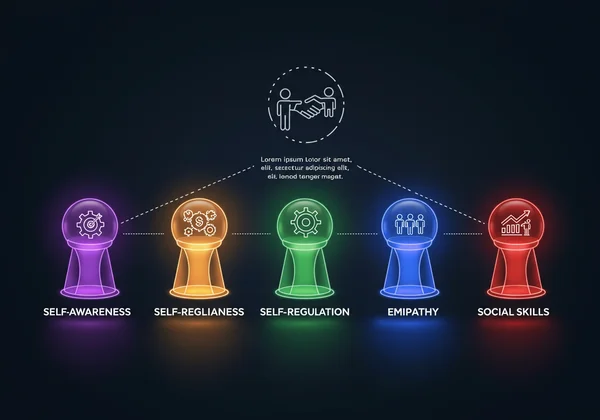
To master workplace EQ, you need to understand its foundational pillars. These five core skills work together to create a holistic ability to navigate the professional environment:
-
Self-Awareness: The ability to recognize and understand your own moods, emotions, and drives, as well as their effect on others.
-
Self-Regulation: The capacity to control or redirect disruptive impulses and moods and to think before acting.
-
Motivation: A passion for work that goes beyond money or status, driven by an internal desire to pursue goals with energy and persistence.
-
Empathy: The ability to understand the emotional makeup of other people and the skill to treat people according to their emotional reactions.
-
Social Skills: Proficiency in managing relationships, building networks, and finding common ground to build rapport.
Real-World Impact: Case Studies of High EQ in Action
Consider two managers with similar technical expertise. One, with low EQ, gives blunt feedback that demotivates their team, struggles to manage stress, and creates a tense work environment. The other, with high EQ, uses empathetic communication to deliver constructive criticism, remains calm under pressure, and fosters a collaborative atmosphere where innovation thrives. The second manager not only achieves better results but also retains top talent and builds a reputation as an effective leader. This is the tangible impact of high EQ in action, turning potential into performance every single day.
Mastering EQ in the Workplace: Key Soft Skills for Professional Influence
Developing your emotional intelligence translates directly into a stronger set of soft skills for work. These are the interpersonal attributes that enhance your interactions, job performance, and career prospects. From leading teams to navigating difficult conversations, EQ is the bedrock of professional influence.
Enhancing Leadership & Team Collaboration with High EQ
Effective leadership is almost synonymous with high emotional intelligence. Leaders with strong EQ can inspire and motivate their teams, foster psychological safety, and build a culture of trust. They are adept at reading the emotional climate of a room and responding accordingly. For team members, high EQ promotes better team collaboration, reducing friction and encouraging a free flow of ideas. If you aspire to lead, starting with an EQ assessment test can reveal your natural leadership strengths.
Navigating Conflict & Difficult Conversations Productively
Workplace conflict is inevitable, but how it's handled determines whether it weakens or strengthens a team. Individuals with high EQ don't shy away from difficult conversations. Instead, they approach them with empathy, a desire for mutual understanding, and the ability to manage their own emotional responses. This crucial skill, often known as conflict resolution, empowers you to transform potential disputes into opportunities for growth and deeper alignment.
Boosting Communication, Influence, and Professional Relationships
Are your ideas heard? Can you persuade others to support your initiatives? Strong communication skills are rooted in emotional intelligence. They involve more than just clear speaking; they require active listening, understanding non-verbal cues, and tailoring your message to your audience. People with high EQ build stronger professional relationships, create wider networks, and exert greater influence without relying on authority.
Driving Innovation, Adaptability, and Resilience in a Dynamic Environment
The modern workplace is defined by change. Emotional intelligence fuels the resilience needed to navigate uncertainty and the adaptability to embrace new challenges. An employee who can manage the stress of a looming deadline, stay optimistic after a setback, and remain open to new processes is invaluable. This emotional fortitude is a key driver of innovation, as it allows individuals and teams to take calculated risks without being paralyzed by the fear of failure.
Practical Strategies to Cultivate Your Emotional Intelligence at Work
The great news about emotional intelligence is that it isn't a fixed trait. It's a set of skills that can be learned, practiced, and developed over time. Here are practical strategies you can implement immediately to start strengthening your EQ.

Boosting Your Self-Awareness: Reflective Practices for Professionals
The cornerstone of your EQ is knowing yourself. To improve your self-awareness, start by practicing mindfulness. Take a few moments each day to check in with your emotional state without judgment. You can also keep a journal, noting situations that triggered strong emotional responses and analyzing why you reacted the way you did. Asking for feedback from trusted colleagues can also provide a valuable external perspective on your behavior and its impact.
Emotional Self-Regulation: Managing Stress and Impulses Under Pressure
When faced with a high-pressure situation, our instinctive reaction is often fight or flight. Emotional self-regulation is about creating a pause between stimulus and response. Practice the "pause" technique: before reacting to a stressful email or comment, take a deep breath and count to ten. This simple act can prevent you from sending an impulsive reply you'll later regret. Identifying your stress triggers and developing healthy coping mechanisms, like a short walk or listening to music, is also crucial.
Developing Workplace Empathy: Understanding Colleagues and Clients
Empathy is about putting yourself in someone else's shoes. To build your workplace empathy, practice active listening. When a colleague is speaking, focus entirely on what they are saying—and what they're not saying—instead of just planning your response. Pay attention to body language and tone of voice. Try to understand their perspective, even if you don't agree with it. This practice builds trust and strengthens professional bonds immensely.
Sharpening Social Skills: Networking, Mentoring, and Team Dynamics
Improving your social skills involves being intentional about your interactions. Make an effort to offer praise for a job well done or provide constructive feedback in a supportive manner. Seek opportunities to collaborate on projects to better understand team dynamics. Engaging in mentorship—either as a mentor or mentee—is another excellent way to hone your ability to build rapport and guide others. A high emotional intelligence score often reflects well-developed social abilities.
Your EQ Assessment: The First Step to Workplace Mastery
You can't improve what you don't measure. Embarking on your EQ development journey begins with understanding your current baseline—your unique set of emotional strengths and challenges. This is where a formal EQ assessment becomes an invaluable tool for targeted growth.
Why a Scientific EQ Test is Essential for Your Professional Development
Guessing about your emotional intelligence can lead you down the wrong path. A scientifically designed EQ test provides objective, structured feedback on the five core pillars of emotional intelligence. It replaces assumptions with data, giving you a clear snapshot of where you excel and where you have opportunities for improvement. This insight is the foundation of any effective professional development plan.
How Our AI-Powered Report Elevates Your Career Growth
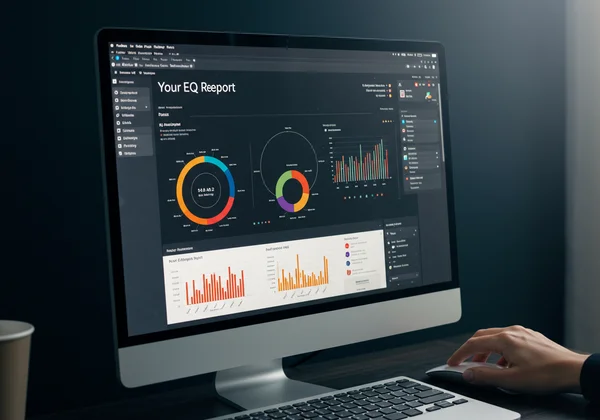
While many tests provide a simple score, true growth comes from actionable insights. After completing the free EQ test on our platform, you have the option to receive a unique, AI-powered report. This advanced analysis goes beyond numbers to provide a personalized deep dive into your emotional patterns. It identifies your specific strengths and challenges in real-world workplace scenarios and delivers a tailored action plan to help you improve.
Ready to Lead? Take Your Free EQ Test Today!
Are you ready to stop guessing and start growing? Understanding your emotional intelligence is the most critical investment you can make in your career. It equips you with the self-awareness to lead authentically and the skills to inspire others. Begin your journey to workplace mastery and take a free EQ test today.
Unlock Your Potential: Emotional Intelligence for Lasting Career Growth
As the modern workplace continues to evolve, your emotional intelligence stands out as the most powerful advantage for true, lasting success. It underpins effective leadership, drives powerful collaboration, and builds the resilience needed to thrive through change. By understanding and actively developing your EQ, you are investing in a more influential, fulfilling, and successful professional future.
The path to improvement starts with awareness. An accurate assessment is your map, showing you exactly where you stand and how to move forward. Take that vital first step—your free, scientifically validated EQ test will unlock the personalized insights that fuel career growth.
Frequently Asked Questions About Emotional Intelligence at Work
What exactly is emotional intelligence, and how does it apply to my career?
What is emotional intelligence? It is the ability to perceive, use, understand, manage, and handle emotions. In your career, this translates to recognizing your feelings and those of others to manage stress, communicate effectively, overcome challenges, and defuse conflict, all of which are vital for advancement.
How do people with high EQ behave in a professional setting?
How do people with high EQ behave? In the workplace, they are typically calm under pressure, thoughtful in their responses, and empathetic listeners. They excel at collaborating, giving and receiving feedback gracefully, and inspiring confidence and motivation in their colleagues.
Can a person have high IQ but low EQ, and how does that affect career progression?
Can a person have high IQ but low EQ? Absolutely. This combination often results in a brilliant individual who struggles to work in teams, alienates colleagues, and fails to lead effectively. Their technical skills may be outstanding, but their lack of interpersonal ability can severely limit their career progression beyond a certain point.
What are some signs of low emotional intelligence in the workplace?
What are the signs of low emotional intelligence? Common signs include difficulty accepting criticism, blaming others for mistakes, having emotional outbursts, and being unable to understand colleagues' perspectives. These behaviors often lead to poor teamwork, strained professional relationships, and a reputation for being difficult to work with.
How can I test my EQ for free to understand my strengths for work?
How can I test my EQ for free? You can get an immediate and accurate measure of your emotional intelligence by taking a scientifically designed assessment. Our platform offers a comprehensive free eq test that provides a baseline score and a summary of your results, helping you identify your unique workplace strengths.