Global Mindful Solutions for Emotional Intelligence in Workplace Conflict Resolution
Workplace conflict rarely begins with one dramatic argument. More often, it starts with a rushed message, an unclear role, a meeting where someone feels dismissed, or a deadline that squeezes out patience. Emotional intelligence gives people a calmer way to notice those moments before they turn into blame. For readers comparing global mindful solutions emotional intelligence workplace conflict resolution ideas, the practical question is simple: how can you understand conflict emotions without letting them run the conversation? EQTest.co offers an educational emotional intelligence self-assessment that can help readers reflect on self-awareness, self-regulation, empathy, motivation, and social skills before they apply those abilities at work.

What Emotional Intelligence Changes in a Conflict
Emotional intelligence is the ability to notice, understand, manage, and use emotions in ways that support better decisions and relationships. In workplace conflict resolution, it does not mean being endlessly agreeable. It means recognizing what is happening inside you, reading the other person's emotional signals with care, and choosing a response that keeps the problem solvable.
This matters because conflict has two layers. The visible layer is the issue: a delayed handoff, a blunt comment, a rejected proposal, or a disagreement about standards. The less visible layer is emotional conflict: embarrassment, fear of losing status, frustration about fairness, worry about being ignored, or anger after repeated interruptions. If people argue only about the visible issue, they may miss the emotional fuel that keeps the disagreement hot.
A mindful approach slows the sequence. Instead of moving straight from trigger to reaction, emotionally intelligent people create a pause. They ask, "What am I feeling, what story am I telling myself, and what outcome do I want from this conversation?" That pause can turn an affective conflict into a clearer discussion about needs, facts, roles, and next steps.
Common Emotional Triggers for Anger at Work
A common emotional trigger for anger in the workplace is perceived disrespect. It can show up when someone feels ignored in a meeting, receives criticism in public, gets excluded from a decision, or senses that their effort is being taken for granted. The event may look small from the outside, but the emotional meaning can feel large: "My work does not matter," "I am losing control," or "They do not value me."
Other triggers are just as common. Ambiguous expectations can make people defensive because no one knows what standard they are being judged against. Unequal workloads can activate resentment. Sudden changes can threaten autonomy. Different communication styles can create unnecessary tension, especially when direct feedback meets a person who values warmth and context.
Emotional intelligence helps by separating the trigger from the interpretation. The message "Can we redo this section?" may mean the work needs a revision. It may not mean the person is incompetent. The calendar invite with no context may be careless, not hostile. This distinction does not excuse poor communication, but it keeps the nervous system from treating every uncomfortable moment as an attack.
Why Emotional Control Supports Conflict Resolution
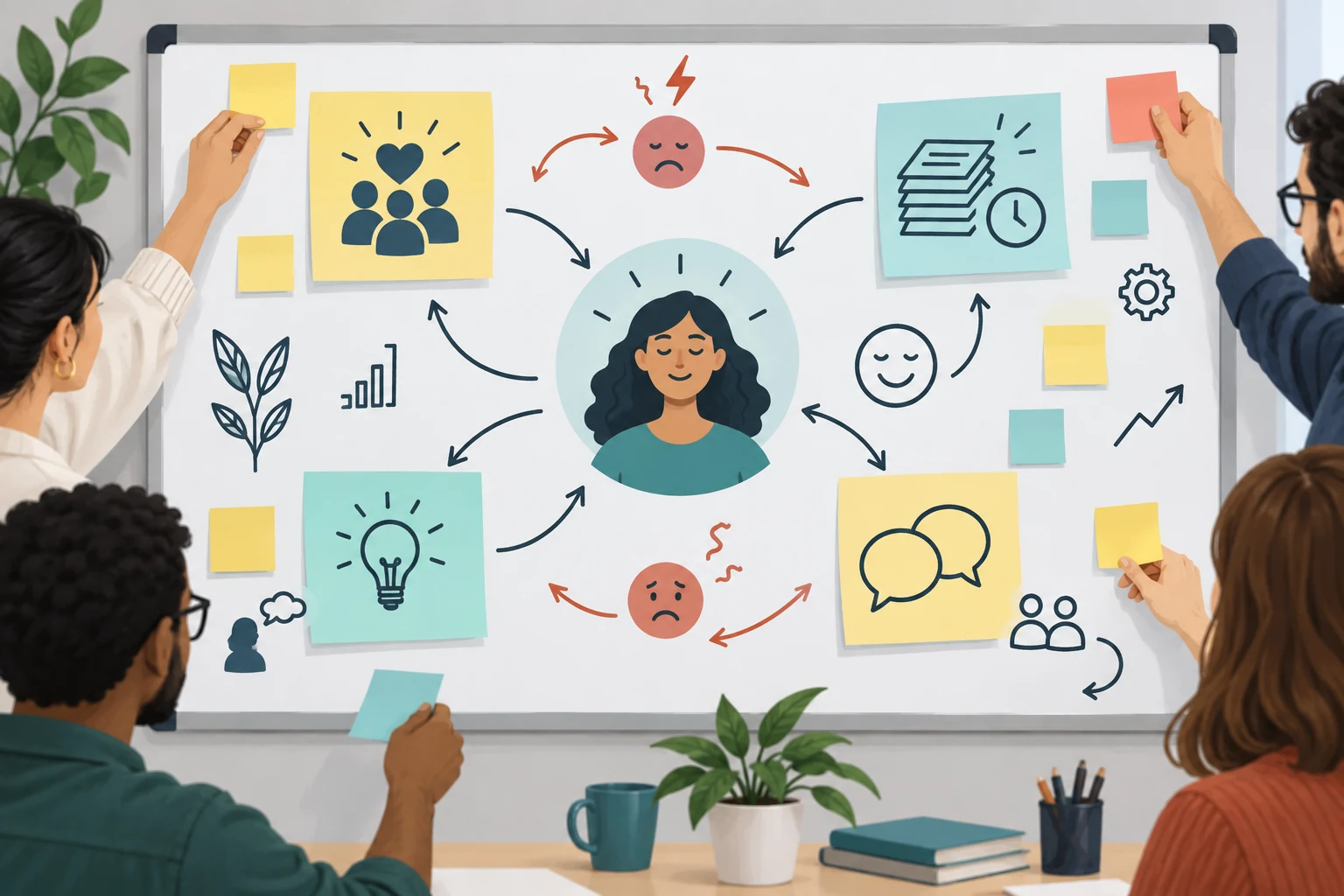
Emotional control is important for resolving conflicts because it protects the conversation from escalation. When anger, shame, or anxiety takes over, people often interrupt, exaggerate, withdraw, send sharper messages, or search for evidence that the other person is the problem. Those reactions may bring short-term relief, but they usually make trust harder to rebuild.
Self-regulation does not mean suppressing emotion. It means making emotion useful. A tight chest might signal that the topic matters. Irritation might reveal an unmet expectation. Anxiety might show that the conversation needs structure. The goal is to read the signal before choosing the behavior.
A simple workplace pause can help. Before replying, name the emotion privately, rate its intensity, and choose a response that matches the actual goal. If the goal is clarity, ask a question. If the goal is repair, acknowledge impact. If the goal is accountability, state the expectation without attacking character. Readers who want a baseline for this skill can use an EQ reflection tool as one educational way to think about current patterns, while remembering that no self-assessment replaces professional judgment or a manager's responsibility to address serious workplace issues.
This is especially useful in negotiation and mediation. People may enter the room with positions, but they often move when they feel heard, respected, and less threatened. Emotional control keeps the focus on interests, options, and agreements instead of personal victory.
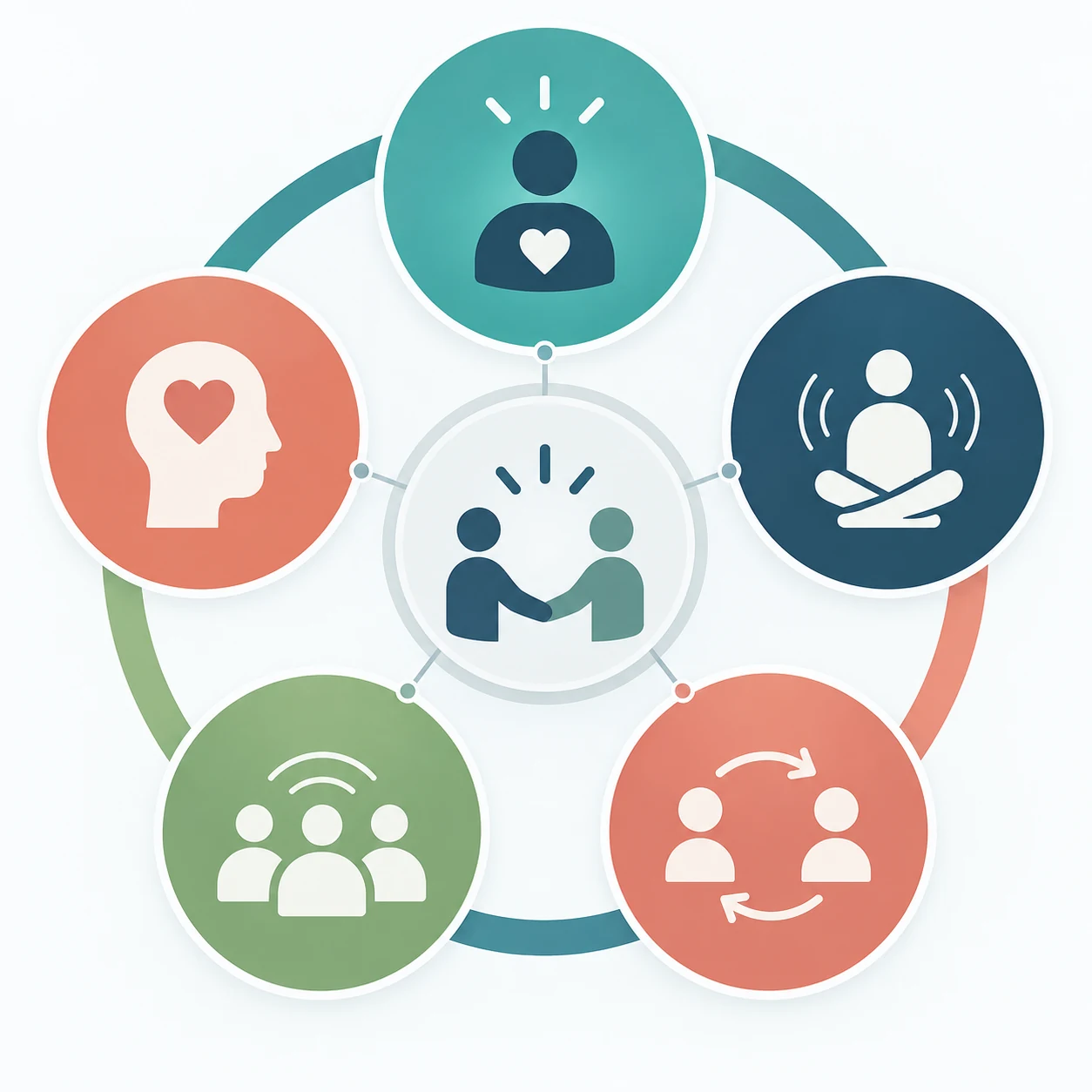
Five EQ Skills That Move Conflict Toward Resolution
The strongest emotional intelligence conflict resolution habits are practical. They are not abstract personality traits; they are behaviors people can rehearse before, during, and after difficult conversations.
1. Self-awareness
Self-awareness asks, "What is my part of the emotional pattern?" A person may notice that they get sharp when deadlines change, go silent around authority, or assume negative intent when feedback arrives late. This awareness reduces automatic reactions. It also helps people speak honestly: "I realized I reacted strongly because I was worried the scope had changed without warning."
2. Self-regulation
Self-regulation turns awareness into choice. It can look like taking a short walk before answering a heated message, asking to revisit a topic after lunch, or rewriting a sentence so it names the issue without blame. The point is not to appear emotionless. The point is to stay effective.
3. Empathy
Empathy helps people understand the other person's view without surrendering their own. In a conflict, empathy might sound like, "I can see why the delay affected your team," or "It makes sense that the public feedback felt uncomfortable." This lowers defensiveness because the other person does not have to fight just to be understood.
4. Social awareness
Social awareness reads the wider room. Is the team exhausted? Is a junior employee staying quiet because the manager is present? Is a remote teammate missing context that in-office colleagues picked up informally? Many emotional intelligence problems in the workplace come from ignoring these social cues.
5. Relationship management
Relationship management is the repair skill. It helps people summarize agreements, clarify next steps, follow up after tension, and rebuild enough trust to keep working together. In strong teams, conflict does not disappear. It becomes less personal, more specific, and easier to learn from.
A Mindful Script for a Difficult Conversation
Use this script as a flexible structure, not a formula. It works best when the issue is appropriate for a direct workplace conversation and when basic safety, policy, and HR responsibilities are already respected.
First, name the shared purpose. "I want us to get aligned on the handoff so the next sprint is smoother." This reduces the feeling that the conversation is a personal attack.
Second, describe the observable facts. "The last two updates arrived after the review deadline." Avoid mind-reading. "You do not care about the project" will likely escalate. "The updates arrived after the deadline" gives both people something concrete to discuss.
Third, name impact without accusation. "When that happens, my team has to review under pressure, and mistakes become more likely." Impact language keeps the focus on work outcomes.
Fourth, invite the other perspective. "What is making the timing difficult from your side?" This is where empathy becomes useful. The answer may reveal workload, unclear priorities, missing information, or a process problem.
Fifth, agree on a next step. "Let's set a Wednesday checkpoint and flag risks by noon if the date is slipping." Conflict resolution improves when the ending is specific enough to reduce future guessing.
Finally, check the relationship. "I appreciate talking this through. I know the schedule has been tight." A small repair statement can prevent a solved task from leaving behind emotional residue.
How to Increase Emotional Intelligence in the Workplace
Increasing emotional intelligence in the workplace is easier when teams practice it in small, repeated moments rather than treating it as a one-time training topic. Start with meeting norms. Give people agendas before sensitive discussions. Separate brainstorming from evaluation. Invite disagreement early, before people feel forced to defend a finished decision.
Next, build reflection into the workflow. After a tense meeting, ask: What did we handle well? Where did emotion shape the conversation? What would make the next discussion easier? This turns conflict into usable feedback.
Managers can model the standard by naming their own adjustments. "I came in frustrated, so I am going to slow down and ask questions first." That kind of sentence teaches self-regulation without a lecture. Teams can also practice active listening by having one person summarize the other's point before responding with their own.
For individuals, a brief weekly review works well. Choose one conflict emotions moment from the week. Write down the trigger, the story you told yourself, the response you chose, and one alternative response you could try next time. Over time, patterns become visible. If the topic connects to mental health, harassment, discrimination, threats, or ongoing harm, bring in appropriate professional, HR, legal, or organizational support rather than relying on self-reflection alone.

Bringing Global Mindful Solutions Into Daily Team Habits
The phrase global mindful solutions emotional intelligence workplace conflict resolution can sound broad, but the daily application is very concrete: people in different roles, cultures, time zones, and communication styles need shared habits for slowing down tension. A mindful team habit is not soft avoidance. It is a disciplined way to keep conflict specific, respectful, and actionable.
For a global or hybrid team, that might mean writing clearer decision records, checking tone before sending short messages, rotating meeting times fairly, and asking people how they prefer to receive feedback. It may also mean noticing power differences. A direct statement from a senior leader can feel like an order even when it was intended as an idea. Emotional intelligence helps the leader check impact rather than relying only on intention.
EQTest.co can support this learning path by giving individuals a private, educational way to explore their emotional intelligence growth areas. The result is not a label. It is a starting point for reflection: Where do I stay calm? Where do I misread others? Where do I need better repair skills after tension?
The best conflict cultures do not promise constant harmony. They help people disagree without contempt, repair without humiliation, and solve problems without pretending emotions are irrelevant.

FAQ
What is emotional intelligence?
Emotional intelligence is the ability to notice and understand emotions in yourself and others, manage your responses, stay motivated, show empathy, and handle relationships with skill. In the workplace, it affects how people communicate, give feedback, receive criticism, and move through conflict.
What is a common emotional trigger for anger in the workplace?
Perceived disrespect is one of the most common triggers. People may feel angry when they are ignored, interrupted, corrected publicly, excluded from decisions, or treated as if their work does not matter. Emotional intelligence helps people pause long enough to test whether that interpretation is accurate.
Why is emotional control important for resolving conflicts?
Emotional control helps people respond to the problem instead of reacting to the threat they feel in the moment. It supports clearer listening, calmer language, better timing, and more specific agreements. It also reduces the chance that a small issue becomes a personal battle.
What is affective conflict?
Affective conflict is conflict driven mainly by feelings, identity, relationship strain, or personal tension. It differs from task conflict, which focuses more on ideas, priorities, or decisions. Many workplace disagreements include both, which is why emotional awareness matters.
How can a team increase emotional intelligence at work?
Teams can increase emotional intelligence by practicing active listening, clarifying expectations, normalizing respectful feedback, reflecting after tense meetings, and training managers to model self-awareness. Small habits repeated consistently usually work better than one dramatic workshop.
Which factors influence conflict resolution?
Conflict resolution is influenced by communication quality, emotional regulation, trust, power dynamics, role clarity, timing, culture, psychological safety, and the willingness of each person to consider the other's perspective. Emotional intelligence strengthens many of these factors.
Can an EQ test resolve workplace conflict?
An EQ test cannot resolve a workplace conflict by itself. It can, however, support self-reflection by helping people think about emotional patterns that may affect communication, empathy, and self-regulation. Serious or persistent workplace issues may require trained support and formal processes.