In Tune With Emotions Meaning, Examples, and Simple Ways to Practice
Being in tune with emotions means you can notice, name, and use your feelings without being ruled by them. It is not the same as being dramatic, overly emotional, or perfectly calm all the time. It is a practical form of emotional self-awareness: you can sense what is happening inside, understand why it might matter, and choose a response that fits the moment. If you want a structured way to reflect on this skill alongside other parts of emotional intelligence, a quick EQ self-reflection tool can offer a useful starting point. This guide explains the meaning, examples, common obstacles, and simple practices for reconnecting with emotions.
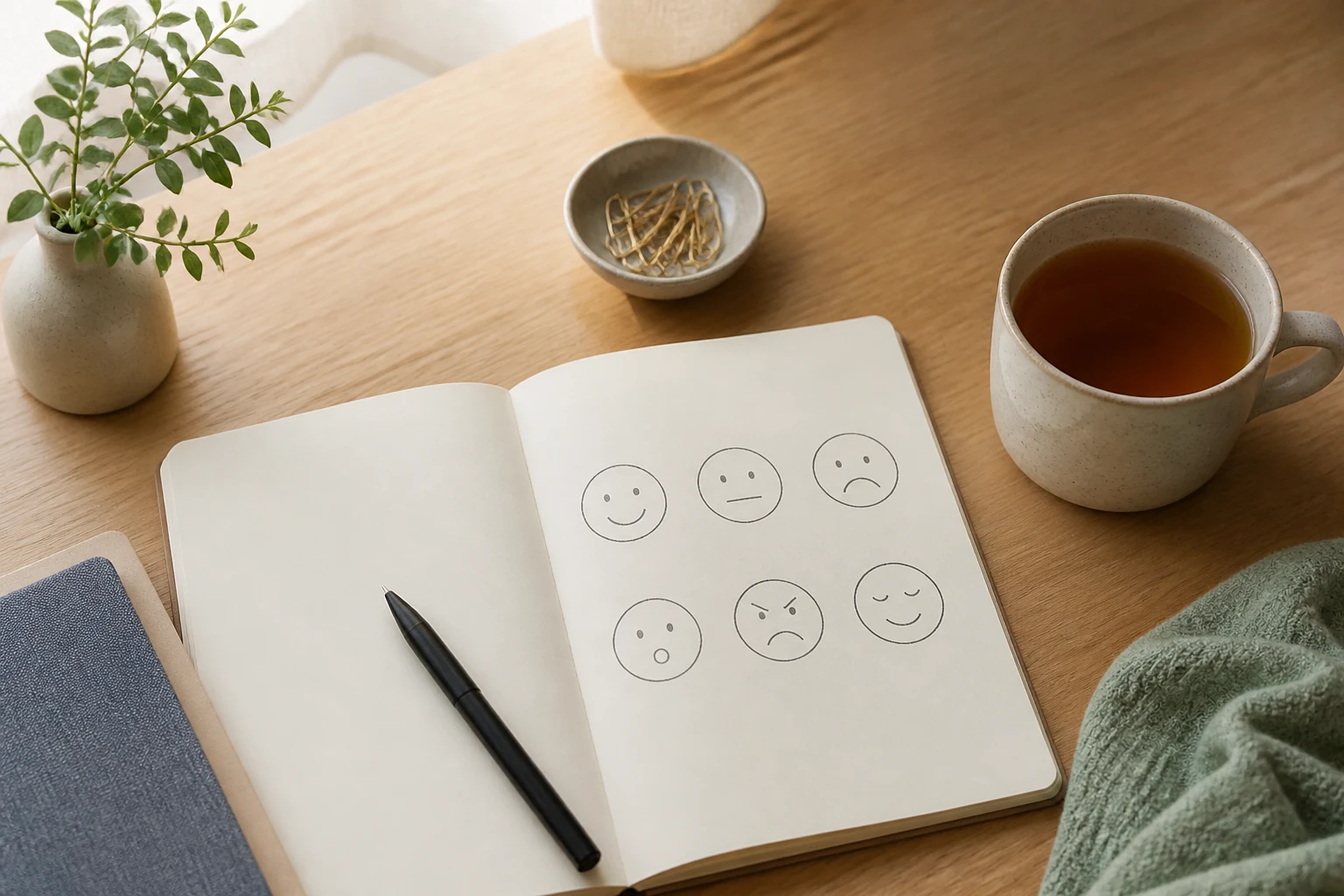
What Does In Tune With Emotions Mean?
To be in tune with emotions is to have enough inner awareness to recognize feelings as signals. A feeling might point to a need, a boundary, a value, a fear, a desire, or a pattern that deserves attention. The phrase is close to terms such as emotionally aware, emotionally attuned, emotionally literate, and self-aware. In emotional intelligence language, it sits especially close to self-awareness and self-regulation.
This does not mean every emotion is accurate as a story. A burst of jealousy may reveal insecurity, but it may not prove that someone betrayed you. A wave of anger may reveal a crossed boundary, but it may not tell you the best way to respond. Emotional attunement gives you information; emotional intelligence helps you interpret and use that information.
Being out of touch with emotions often looks quieter than people expect. It can sound like "I'm fine" when your body is tense, or "I don't care" when you actually feel hurt. It can also show up as intellectualizing, where you explain the situation with perfect logic but never pause to feel what happened. The goal is not to turn off thinking. The goal is to let thinking and feeling work together.
Why Emotional Attunement Matters
Emotions influence attention, memory, communication, and decision making. When you can identify them earlier, you usually have more choices. You can pause before sending the sharp message. You can notice that "tired" is really "overextended." You can admit that resentment is building before it becomes a cold withdrawal.
This matters in relationships because people often respond to the emotion underneath the words. You may say, "I'm just asking a question," while your tone carries frustration. You may say, "Do whatever you want," while your face says disappointment. Being in tune with others' emotions begins with reading the emotional weather in yourself first. Once you understand your own signals, it becomes easier to listen without immediately defending, fixing, or withdrawing.
It also matters at work. Emotional control is often misunderstood as having no visible feelings. A healthier version is emotional regulation: noticing what is happening, choosing the right level of expression, and staying connected to your values under pressure. If you are developing this broader skill set, a 24-question EQ self-assessment can help you reflect on self-awareness, self-management, empathy, motivation, and social skills in one place.
Examples of Being In Tune With Emotions
Here are a few everyday examples of emotional attunement:
- You notice your chest tighten before a difficult meeting and realize you are anxious because the outcome matters to you.
- You feel irritated with a friend, then identify the deeper feeling as disappointment that plans changed again.
- You sense excitement and fear before a new opportunity, instead of forcing yourself to pick only one.
- You realize you are not angry at the person in front of you; you are overloaded from a stressful week.
- You hear a partner say "I'm fine" and gently notice that their tone sounds discouraged, then ask a caring follow-up.
- You pause before reacting because you can tell the first rush of emotion is stronger than the situation requires.
These examples show that emotional attunement is not passive. It is active listening turned inward. You observe sensation, language, context, and behavior. Then you make a more informed choice.
How to Feel Your Feelings Instead of Intellectualizing Them
Intellectualizing can be helpful when you need perspective, but it becomes limiting when it replaces emotional contact. If your first move is always analysis, your feelings may stay vague in the background. Try using a three-layer check-in:
- Body: What physical sensations are present? Look for tightness, heaviness, warmth, restlessness, numbness, or changes in breathing.
- Emotion: What feeling word fits best right now? Start broad if needed: sad, mad, scared, glad, ashamed, lonely, calm, hopeful.
- Meaning: What might this emotion be pointing toward? A need for rest, clarity, reassurance, action, apology, space, or connection?
The order matters. People who overthink often jump straight to meaning. The body layer slows the process down. It helps you feel your feelings before turning them into a theory.

Another useful practice is the "name and nuance" method. Instead of stopping at "bad," ask whether the feeling is disappointment, grief, embarrassment, guilt, boredom, envy, fear, or loneliness. Instead of "good," ask whether it is relief, pride, affection, hope, gratitude, peace, or curiosity. Specific words reduce emotional blur. They also make expression easier because "I feel rejected" gives another person more information than "I'm upset."
Reconnecting With Emotions in Five Gentle Steps
If you feel out of touch with your emotions, begin small. Emotional awareness grows through repeated safe contact, not through forcing yourself to feel everything at once.
1. Pause before you explain
When something affects you, take ten seconds before explaining why. Ask, "What am I noticing?" This creates a small gap between reaction and interpretation.
2. Track patterns, not perfection
Use a short journal note once a day: situation, body signal, emotion, response. Over time, you may notice that certain meetings, messages, people, or expectations regularly trigger similar feelings.
3. Practice accepting emotions without obeying them
Acceptance means the emotion is allowed to exist. It does not mean the emotion gets to drive every action. You can accept anger and still speak carefully. You can accept sadness and still make dinner. You can accept anxiety and still ask for clarification.
4. Express one layer more honestly
If you usually say, "No problem," try, "I can do that, but I need more time." If you usually go silent, try, "I'm not ready to talk yet, but I do want to come back to this." Emotional expression does not have to be intense to be honest.
5. Build support when feelings feel too big
Sometimes strong emotions are easier to understand with another person. A trusted friend, coach, mentor, support group, or qualified professional can help you slow down and sort through what is happening. If emotions feel overwhelming, persistent, or connected to safety concerns, professional support is a wise option.
Being In Tune With Others' Emotions
Being in tune with others' emotions means noticing emotional cues while respecting that you cannot read minds. Tone, facial expression, posture, timing, and word choice can offer clues, but the other person remains the best source of truth. The most emotionally intelligent move is often a gentle check: "You seem quiet today. Is something weighing on you?"

Good attunement combines empathy with boundaries. You can care about someone's feelings without taking responsibility for every feeling they have. You can listen without agreeing with every interpretation. You can ask what they need instead of assuming. This is especially important in close relationships, where emotional signals can become tangled with old habits.
A simple formula helps: observe, ask, reflect. Observe what you notice without judgment. Ask a question that leaves room for correction. Reflect back what you heard. For example: "I noticed you got quiet after that comment. Did it land badly? I want to understand." This approach supports connection because it treats emotions as information, not accusations.
When Emotions Feel Strong
Some people search for emotional control because their feelings arrive with intensity. Strong emotions are not automatically a problem. They may mean you are sensitive to meaning, conflict, injustice, uncertainty, or connection. The key question is whether the intensity regularly pushes you into actions that harm your goals, relationships, or well-being.
When emotions feel strong, regulate before you resolve. Slow your breathing, step away briefly if needed, drink water, move your body, or write the first uncensored version in a private note instead of sending it. After the first wave passes, ask what the emotion is asking for. Is it asking for protection, honesty, rest, repair, or a clearer boundary?
It can also help to separate the feeling from the command. "I feel abandoned" is a feeling. "Therefore I should accuse them" is a command. Emotional attunement lets you honor the first without automatically following the second.
A Simple Weekly Practice for Emotional Intelligence
To build the habit, choose one repeating check-in. At the end of each week, answer four questions:
- What emotion visited me most often this week?
- Where did I feel it in my body?
- What did it seem to protect, request, or reveal?
- What is one small response I want to try next week?
This practice turns emotional awareness into emotional growth. It is not about scoring yourself as good or bad. It is about noticing patterns with enough kindness to make a better choice next time. For readers who want a broader lens on self-awareness and relationship skills, an emotional intelligence check-in can pair well with weekly reflection. The more consistently you practice, the easier it becomes to stay in tune with emotions without being pulled around by every emotional wave.

FAQ
What is it called when you are in tune with your emotions?
It is often called emotional self-awareness, emotional attunement, emotional literacy, or being emotionally aware. In emotional intelligence frameworks, it is closely related to self-awareness and self-regulation.
What does in tune with emotions mean?
It means you can notice what you feel, name it with reasonable accuracy, understand what it may be signaling, and choose a response instead of reacting automatically.
What does it mean to be in tune with others' emotions?
It means you can notice emotional cues in another person, respond with empathy, and check your understanding without assuming you know exactly what they feel.
What are examples of emotions?
Common emotions include joy, sadness, anger, fear, disgust, surprise, shame, guilt, pride, relief, gratitude, loneliness, envy, hope, and calm. Many real experiences include more than one emotion at the same time.
Why do I feel emotions so strongly?
Strong emotions can relate to stress, sensitivity, values, unmet needs, past experiences, lack of rest, or the importance of the situation. If strong feelings are persistent, overwhelming, or connected to safety concerns, consider support from a qualified professional.
How can I feel my feelings instead of intellectualizing them?
Start with the body before the story. Notice physical sensations, choose one or two feeling words, then ask what the emotion may need. Short journaling and emotion wheels can also help.
What is the opposite of being in tune with emotions?
The opposite may be feeling out of touch, emotionally numb, disconnected, avoidant, or overly analytical about feelings. These patterns can change with patient practice and support.