What Is Emotional Intelligence? A Complete Guide to Understanding EQ
Do you ever wonder why some people, despite average intelligence, skyrocket in their careers while others with brilliant minds struggle? The answer often lies in something beyond cognitive ability: their emotional intelligence. Unlike IQ, which tends to be static, your emotional intelligence is a flexible set of skills that you can build and refine over time.
In a world driven by relationships and teamwork, understanding emotions—both your own and others'—is the "missing link" to personal and professional success. This guide breaks down exactly what is emotional intelligence, its core components, real-world signs, and how you can discover your emotional intelligence starting today.
What Is Emotional Intelligence in Simple Words?
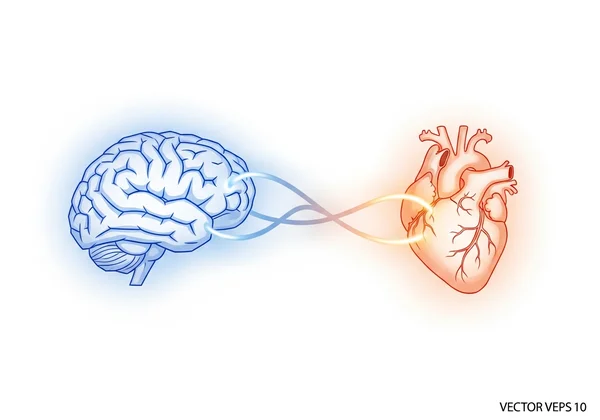
At its core, what is emotional intelligence? In simple terms, it is the ability to recognize, understand, and manage your own emotions, while also being able to recognize, understand, and influence the emotions of others.
Often abbreviated as EQ (Emotional Quotient) or EI, this concept explains why "book smarts" aren't enough for a fulfilling life. Think of IQ as the horsepower of a car engine—it determines potential speed. Emotional intelligence, on the other hand, is the steering wheel and brakes—it determines how well you navigate traffic, avoid crashes, and reach your destination safely.
Defining the Concept: Understanding, Using, and Managing Emotions
Emotional intelligence isn't just about being "nice." It involves a complex set of capabilities:
- Perceiving emotions: Accurately identifying how you and others are feeling.
- Using emotions: Harnessing feelings to facilitate thinking and problem-solving.
- Understanding emotions: Grasping the causes of emotions and how they might change.
- Managing emotions: Regulating your own feelings and responding effectively to others.
IQ vs. EQ: Why Book Smarts Aren't Enough
While IQ (Intelligence Quotient) measures cognitive abilities like logic and pattern recognition, it doesn't account for human connection. You might be able to solve complex equations, but can you resolve a conflict with a coworker without burning bridges?
Ideally, IQ and EQ work in tandem. High IQ helps you get the job, but high EQ helps you get promoted, lead teams, and maintain healthy relationships. The good news is that while IQ is largely genetic, emotional intelligence can be learned and strengthened at any age.
The 5 Pillars of Emotional Intelligence (The Goleman Model)
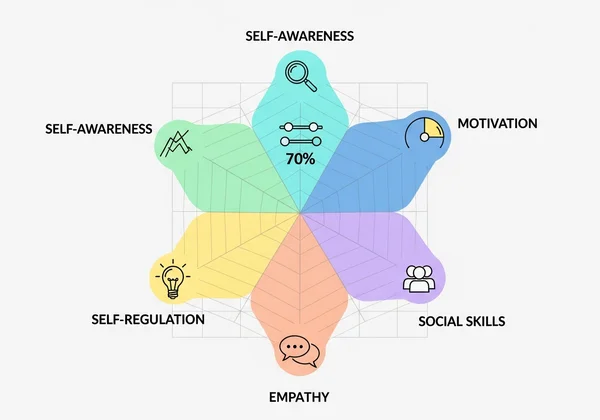
Psychologist Daniel Goleman popularized the framework that breaks EQ down into five key components. Understanding these pillars is the first step toward mastering emotional intelligence in psychology.
Self-Awareness: Knowing Your Internal State
This is the foundation of the entire structure. Self-awareness means you can recognize an emotion as it happens. It allows you to understand your strengths, weaknesses, and triggers. Without self-awareness, you are flying blind, often reacting to situations rather than responding to them.
Self-Regulation: Controlling Impulses
Once you are aware of an emotion, what do you do with it? Self-regulation is the ability to control disruptive impulses and moods. It’s the difference between screaming at a driver who cut you off and taking a deep breath to let it go. People with strong self-regulation are flexible and adapt well to change.
Internal Motivation: Beyond External Rewards
High-EQ individuals are driven by more than just money or status. They possess a passion to work for internal reasons that go beyond external rewards. This includes a strong drive to achieve, optimism even in the face of failure, and organizational commitment.
Empathy: Reading the Room
Empathy is the ability to understand the emotional makeup of other people. It doesn't mean you have to agree with everyone, but it means you can treat people according to their emotional reactions. This skill is critical for building and retaining talent in any organization.
Social Skills: Managing Relationships
Social skills are about managing relationships to move people in the desired direction. It’s friendliness with a purpose. Whether it’s influencing a team, persuading a client, or just being a good listener, social skills tie all the other components together.
Why Is Emotional Intelligence Important? (Real-World Impact)
Knowing the definition is one thing, but seeing the impact is another. Why does emotional intelligence matter so much in your daily life?
In the Workplace: Leadership and Team Dynamics
In the modern workplace, emotional intelligence in leadership is often the differentiator between a good manager and a great leader. Leaders with high EQ can:
- Navigate office politics effectively.
- Keep team morale high during stressful periods.
- Provide feedback that is constructive rather than destructive.
- Resolve conflicts before they escalate.
In Relationships: Communication and Conflict Resolution
Emotional intelligence in a relationship is just as vital. It allows partners to communicate their needs clearly without attacking each other. High EQ helps you understand that your partner's bad mood might not be about you, preventing unnecessary arguments. It fosters intimacy, trust, and resilience against life's challenges.
Mental Well-being: Managing Stress and Anxiety
Your EQ level directly impacts your mental health. People who can regulate their emotions are better equipped to handle stress, anxiety, and depression. Instead of being overwhelmed by negative feelings, they have the tools to process them healthily and bounce back from setbacks.
Signs and Examples: High EQ vs. Low EQ
It can be hard to objectively judge our own emotional skills. Here are some concrete examples to help you identify where you might stand.
Key Traits of High Emotional Intelligence
If you possess high emotional intelligence, you likely:
- Pause before reacting: You take a moment to think before you speak or act.
- Listen to understand: You listen to what others are saying, rather than just waiting for your turn to speak.
- Handle criticism well: You view feedback as an opportunity to learn, not a personal attack.
- Show authenticity: You are open about your feelings and values.
- Forgive easily: You don't hold onto grudges that harm your own well-being.
Common Behaviors of Low Emotional Intelligence
On the flip side, signs of lower emotional intelligence might include:
- Getting easily offended: You often feel that others are misunderstanding or attacking you.
- Difficulty asserting yourself: You might be aggressive or passive-aggressive rather than assertive.
- Lack of empathy: You struggle to understand why others feel sad or upset.
- Blaming others: You rarely take responsibility for your mistakes, often blaming circumstances or other people.
- Emotional outbursts: You have trouble controlling your anger or frustration in public.
Moving from Theory to Insight: Assessing Your EQ
Reading about these signs might have sparked some curiosity. Do you see yourself in the "High EQ" traits, or did some of the "Low EQ" examples hit a little too close to home?
Why Self-Reflection is the First Step to Growth
Honest self-assessment is difficult. We all have blind spots. However, acknowledging where you are right now is the only way to move forward. Understanding your emotional profile isn't about labeling yourself as "good" or "bad"—it's about identifying which muscles you need to exercise.
Introducing Eqtest.co: Your Tool for Personal Insight
If you are ready to explore your emotional landscape more objectively, our platform offers a resource designed for self-discovery. We provide a scientific EQ test that evaluates your responses across key emotional domains.
This isn't a medical diagnosis. Instead, think of it as a mirror. Our tool reflects your current emotional patterns back to you, helping you see things you might miss in the mirror of daily life.
What Our AI Report Reveals About Your Unique Profile
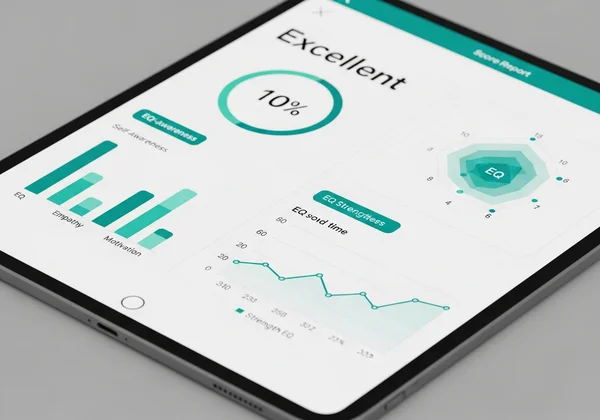
After completing the assessment, you can choose to receive a comprehensive AI-driven report. This report goes beyond a simple score. It offers:
- Personalized analysis: Breaking down your strengths and growth areas.
- Actionable advice: Specific tips tailored to your unique profile.
- Deep insights: Helping you understand how your emotional style affects your career and relationships.
Are you curious to see your profile? You can check your traits with this EQ test to start your journey of self-discovery today.
Can Emotional Intelligence Be Learned? (Neuroplasticity)
A common question is, "Am I stuck with the EQ I have?" The answer is a resounding no.
Trait vs. Skill: The Science of Growth
Unlike IQ, which is relatively fixed, emotional intelligence is a skill. Thanks to neuroplasticity—the brain's ability to rewire itself—you can train your brain to handle emotions differently. Old habits of reacting with anger or shutting down can be unlearned and replaced with new, healthier patterns.
Practical Tips to Start Improving Today
Improving your EQ takes practice, but you can start with small steps:
- Practice the "Pauses": When triggered, force yourself to count to ten before responding.
- Name your emotions: Simply labeling an emotion ("I feel anxious") can reduce its intensity.
- Ask for feedback: Ask a trusted friend how they perceive your reaction to stress.
- Observe others: Watch people with high EQ and try to mimic their communication style.
The Journey to Self-Mastery Starts Here
Understanding what is emotional intelligence is the first step toward a more balanced, successful life. Whether you want to become a better leader, a more supportive partner, or simply feel more at peace with yourself, developing your EQ is the most effective investment you can make.
Remember, this is a journey, not a destination. It starts with self-awareness. If you haven't yet, take a moment to explore our emotional intelligence online test to get a clear baseline of where you stand today. Armed with that knowledge, you can build the skills you need for a brighter, more emotionally intelligent future.
Frequently Asked Questions
Is emotional intelligence considered a soft skill?
Yes, emotional intelligence is classified as a soft skill. However, in today's collaborative work environment, many experts refer to it as a "power skill" because it is essential for leadership and team cohesion.
Can a person have high IQ but low EQ?
Absolutely. High cognitive intelligence (IQ) does not guarantee high emotional intelligence. You can be brilliant at logic and math but struggle significantly with empathy and social interaction.
Is emotional intelligence genetic or learned?
It is a mix of both. While some aspects of temperament are genetic, research shows that a significant portion of emotional intelligence is learned through upbringing, socialization, and deliberate practice.
Does emotional intelligence increase with age?
Generally, yes. As people gain life experience and maturity, their EQ tends to rise. However, this natural growth can be accelerated significantly with intentional effort and training.
What are the 4 domains of emotional intelligence?
While Goleman uses 5 pillars, another common model groups EQ into 4 domains: Self-Awareness, Self-Management, Social Awareness, and Relationship Management. Both models cover the same core concepts but structure them slightly differently.