Resumen de Emotional Intelligence 2.0: ideas clave, guía por capítulos y aprendizajes prácticos de EQ
El libro presenta el EQ como la capacidad de reconocer emociones propias y ajenas, y usar esa conciencia para guiar conductas y relaciones. No trata la emoción como un problema que deba eliminarse, sino como información que puede observarse, nombrarse, practicarse y mejorarse. Travis Bradberry y Jean Greaves proponen una ruta práctica: detectar detonantes, escoger una habilidad, practicar conductas concretas y revisar el cambio con feedback. For readers who want a gentle starting point, a autoevaluación de EQ en línea can help organize observations about self-awareness, self-management, empathy, and relationship habits.
This guide summarizes the book, maps its skill structure, offers a practical reference, and distinguishes Emotional Intelligence 2.0 from the professional EQ-i 2.0 assessment and from newer Bradberry material.
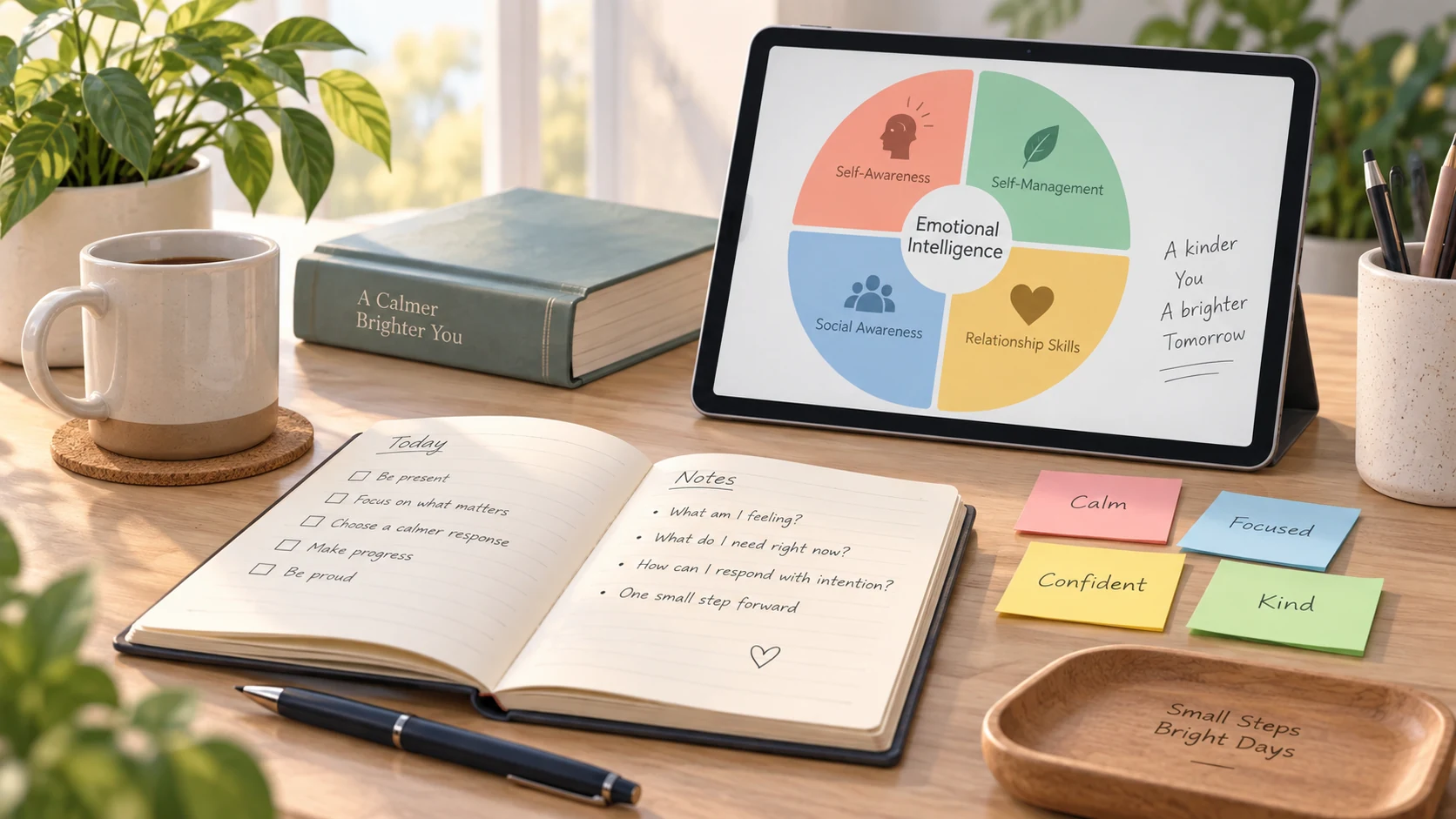
De qué trata realmente Emotional Intelligence 2.0
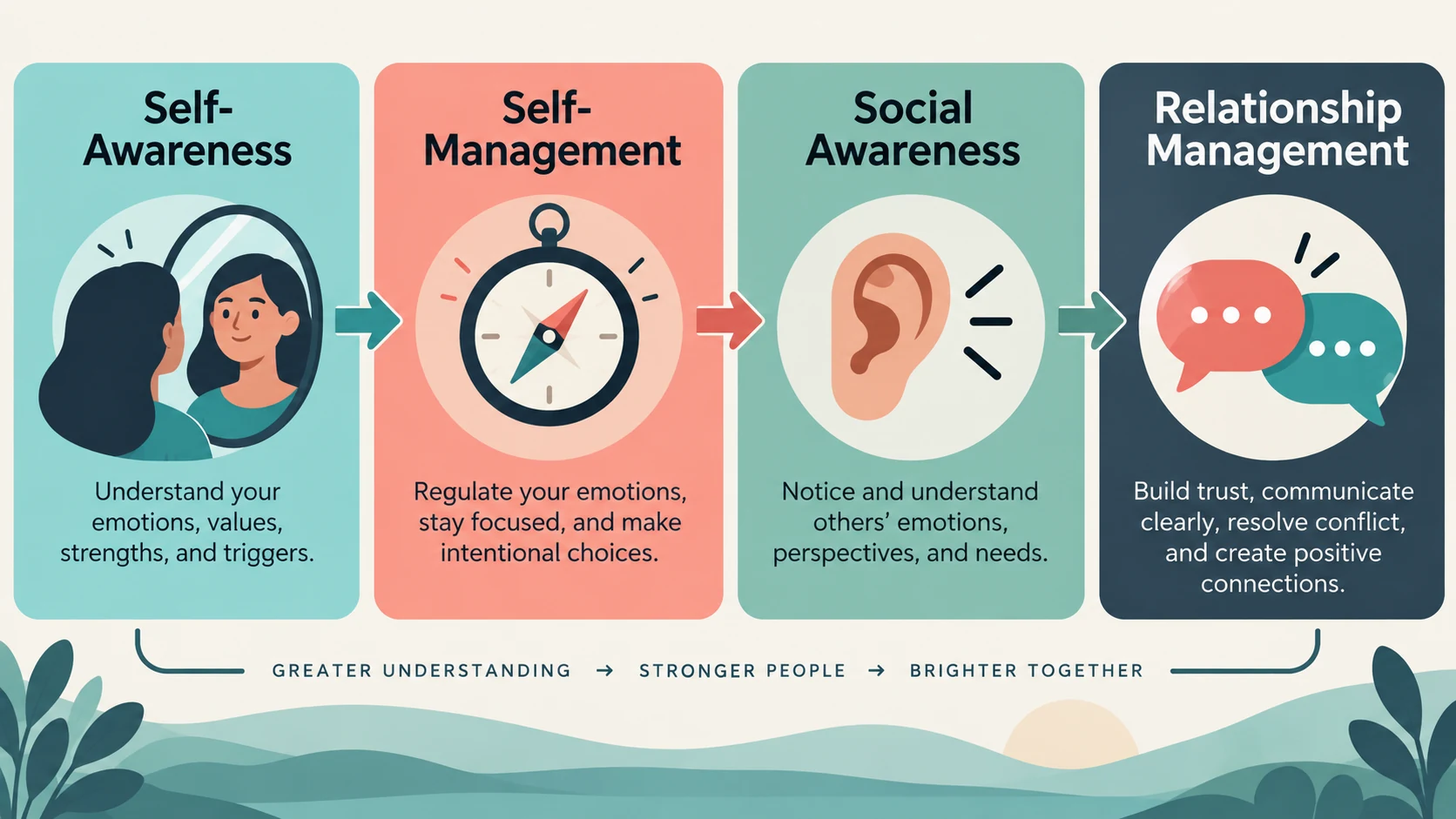
El libro presenta el EQ como la capacidad de reconocer emociones propias y ajenas, y usar esa conciencia para guiar conductas y relaciones. No trata la emoción como un problema que deba eliminarse, sino como información que puede observarse, nombrarse, practicarse y mejorarse. Travis Bradberry y Jean Greaves proponen una ruta práctica: detectar detonantes, escoger una habilidad, practicar conductas concretas y revisar el cambio con feedback. The four central skills are self-awareness, self-management, social awareness, and relationship management. The first two describe personal competence; the second two describe social competence in communication, conflict, feedback, and trust building.
An EQ score should not be treated as a fixed label. It is better used as a snapshot for reflection. EQTest.co presents a prueba rápida de inteligencia emocional in that educational spirit: useful for noticing patterns, not for clinical judgment or a permanent identity.
Resumen de Emotional Intelligence 2.0 por capítulo y habilidad
The book is best remembered as a skill manual rather than a plot-like chapter sequence. It defines EQ, explains why emotion can outrun slower reflection, introduces the four skills, and offers short strategies for practice.
Capítulo 1 y el mensaje central
Emotion and reason are connected. When something happens, an emotional reaction may arrive before careful thought catches up. The goal is not to eliminate emotion, but to notice it early enough that it becomes useful information instead of automatic behavior.
Autoconciencia
Self-awareness is the foundation because a feeling cannot be managed until it has been noticed. The book encourages readers to identify triggers, observe how moods influence decisions, and ask how others experience their behavior.
Autocontrol
Self-management turns awareness into action. Useful practices include pausing before reacting, separating emotional and logical arguments, choosing self-talk carefully, and building routines that reduce impulsive decisions.
Conciencia social
Social awareness means paying attention to other people with enough patience to understand what may be happening beneath the words. Listening, observing tone and body language, and checking assumptions are central strategies.
Gestión de relaciones
Relationship management applies emotional awareness in real interactions. It includes repairing misunderstandings, giving feedback respectfully, explaining intent, and staying present during tension. Trust grows through consistency and follow-through.
Hoja de referencia de Emotional Intelligence 2.0
| Skill | What to notice | One practice |
|---|---|---|
| Self-awareness | Triggers, moods, and repeated reactions | Name the exact emotion before acting |
| Self-management | The gap between feeling and behavior | Pause, breathe, and choose the next useful step |
| Social awareness | Other people's tone, timing, and context | Listen without preparing your reply too early |
| Relationship management | Trust, clarity, repair, and follow-through | Summarize what you heard before responding |
A simple weekly practice is to choose one skill and one situation. In a recurring meeting or family conversation, track tone, facial expression, pacing, and what is not being said. Afterward, write down one assumption and one better question for next time.
Cómo usar el libro con una prueba de EQ
Searches such as TalentSmart EQ test, emotional intelligence appraisal test, and emotional intelligence 2.0 code point to the book's assessment ecosystem. Readers should distinguish the book by Travis Bradberry and Jean Greaves, the publisher-linked access-code experience, and EQ-i 2.0 from Multi-Health Systems.
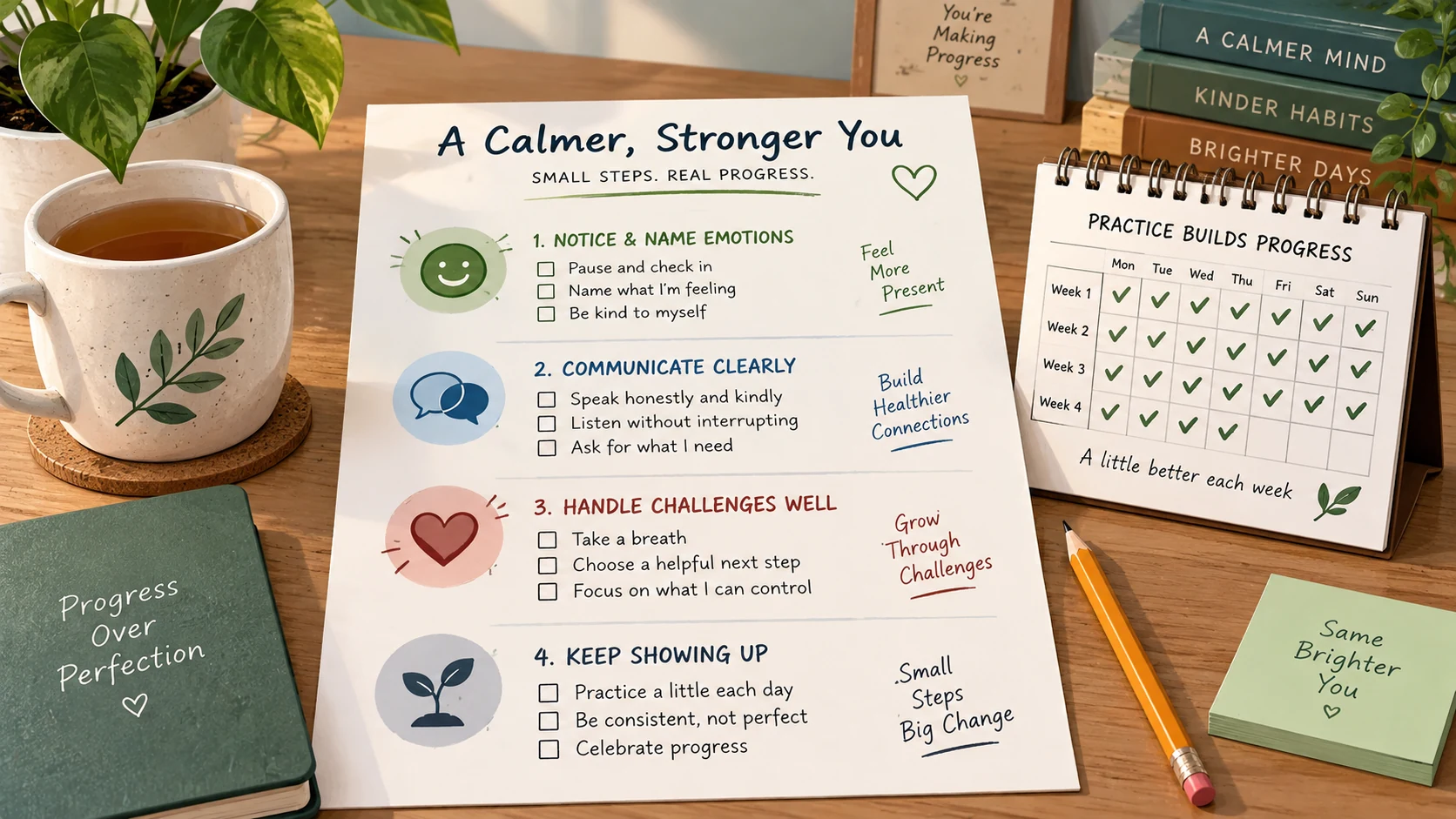
For everyday readers, the practical move is simple: read the book for language and strategy, use a self-reflection tool to notice current patterns, then practice one behavior for a few weeks.
¿Todavía vale la pena leer Emotional Intelligence 2.0?
Yes, the book remains useful for readers who want practical EQ language and behavior prompts. It is strongest for people who prefer short strategies over dense theory, and for teams, managers, students, and coaches who want shared vocabulary.
The book has limits. Claims about EQ and performance should be read with healthy caution because emotional intelligence research includes different models, measures, and debates. It works best as a practice guide, not as the final word on psychology.
The New Emotional Intelligence is Bradberry's later update with new strategies, a newer assessment experience, and video-based learning support. The best use of any summary is action: choose one conversation, trigger, or listening habit, track it, reflect on it, and use an herramienta de reflexión de EQ para crecimiento personal if you want a low-pressure first step.
FAQ
¿Qué mide el EQ-i 2.0?
EQ-i 2.0 is a professional emotional intelligence assessment that measures emotional and social functioning, including self-perception, self-expression, relationships, decision making, and stress management. It is different from the book and from general online self-reflection tools.
¿Qué es la inteligencia emocional en un resumen breve?
Emotional intelligence is the ability to notice emotions in yourself and others, understand what those emotions may mean, and use that awareness to guide behavior.
¿Es Emotional Intelligence 2.0 un buen libro?
It is a good book for readers who want practical strategies and simple language. It may feel too simplified for readers seeking academic depth, but it is useful as a starter guide.
¿Existe un PDF de Emotional Intelligence 2.0?
Many people search for a PDF, but the safest route is to use legitimate book retailers, libraries, or authorized digital editions. A legal summary can help you decide whether to read the full book.
¿Cuál es la tabla de contenidos de Emotional Intelligence 2.0?
The book is commonly understood around an introduction to EQ, the four skills, and many short strategies for practice. Exact table-of-contents details can vary by edition and format.
¿Cuáles son las estrategias de conciencia social de Emotional Intelligence 2.0?
The strategies include listening fully, observing nonverbal cues, noticing mood shifts, checking assumptions, and considering context before responding.
¿Qué diferencias hay entre Emotional Intelligence 2.0 y The New Emotional Intelligence?
Emotional Intelligence 2.0 is the earlier book by Bradberry and Greaves. The New Emotional Intelligence is Bradberry's later update with refreshed strategies, a newer test experience, and additional learning support.