Zusammenfassung von Emotional Intelligence 2.0: Kernideen, Kapitelführer und praktische EQ-Erkenntnisse
Das Buch beschreibt EQ als Fähigkeit, Emotionen bei sich und anderen zu erkennen und diese Wahrnehmung für Verhalten und Beziehungen zu nutzen. Emotionen werden nicht als Störung behandelt, sondern als Information, die beobachtet, benannt, geübt und verbessert werden kann. Travis Bradberry und Jean Greaves schlagen einen praktischen Weg vor: Auslöser erkennen, eine Fähigkeit wählen, konkrete Verhaltensweisen üben und Veränderung mit Feedback verfolgen. For readers who want a gentle starting point, a Online-EQ-Selbsteinschätzung can help organize observations about self-awareness, self-management, empathy, and relationship habits.
This guide summarizes the book, maps its skill structure, offers a practical reference, and distinguishes Emotional Intelligence 2.0 from the professional EQ-i 2.0 assessment and from newer Bradberry material.
Worum es in Emotional Intelligence 2.0 wirklich geht
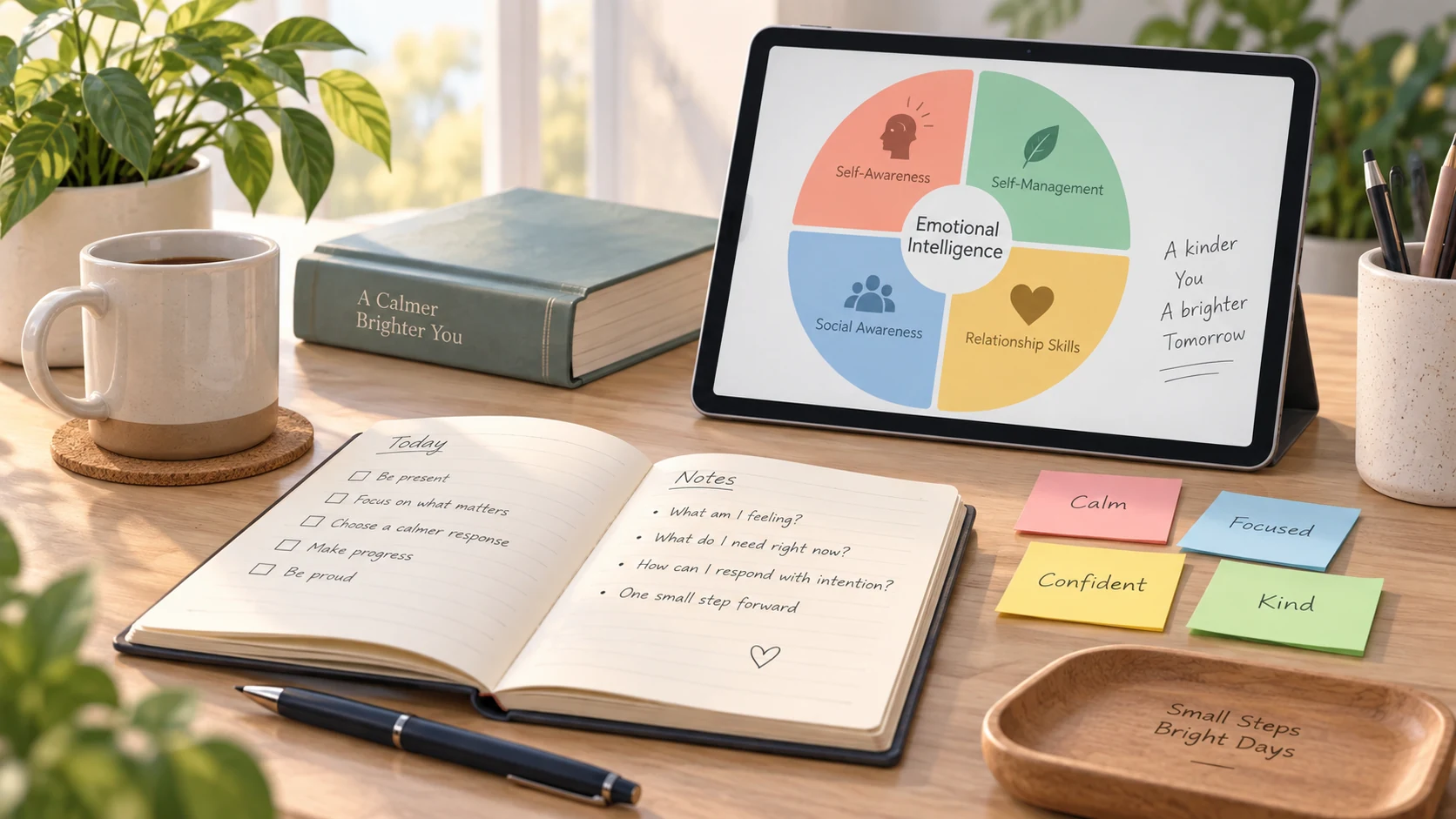
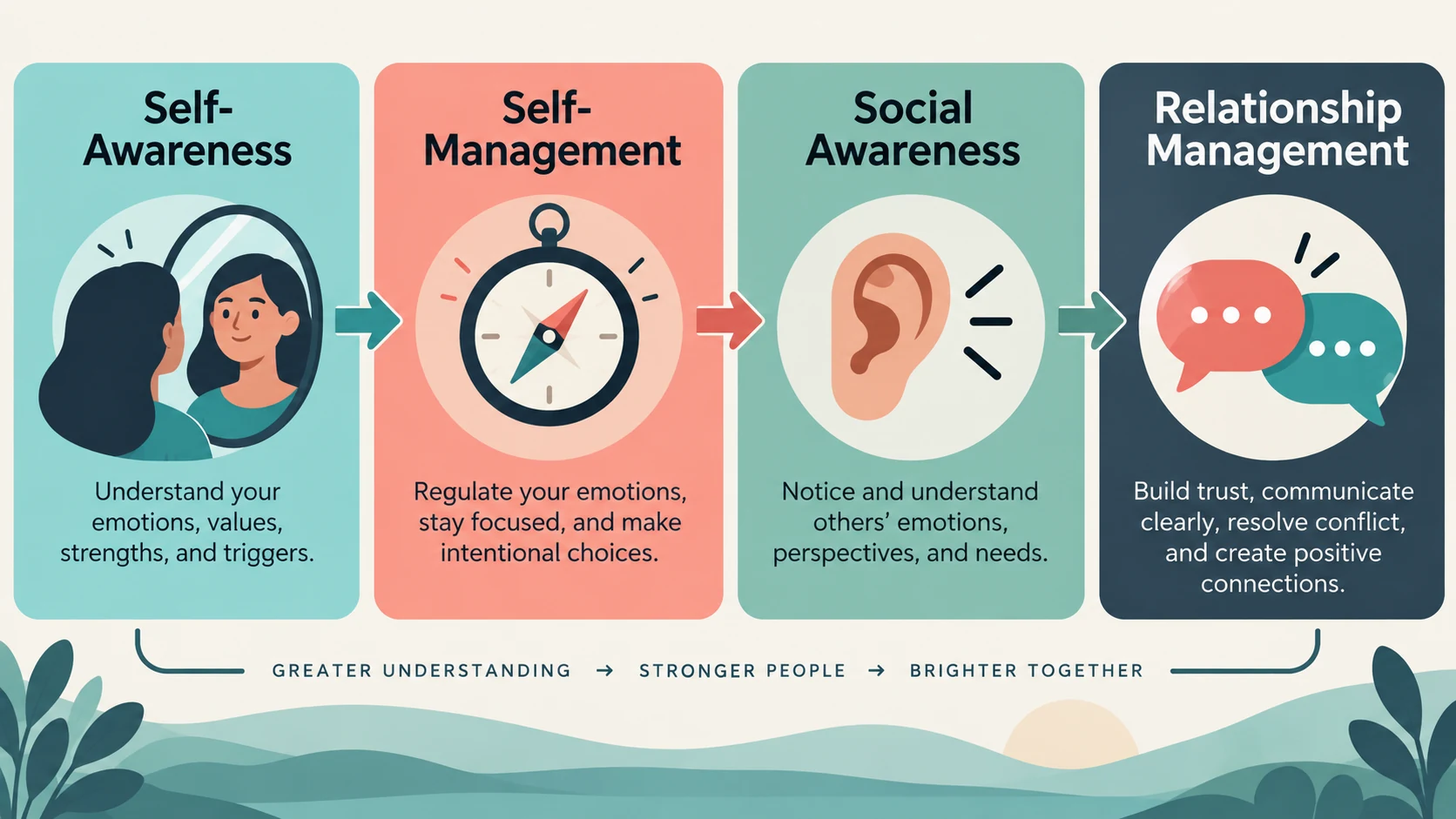
Das Buch beschreibt EQ als Fähigkeit, Emotionen bei sich und anderen zu erkennen und diese Wahrnehmung für Verhalten und Beziehungen zu nutzen. Emotionen werden nicht als Störung behandelt, sondern als Information, die beobachtet, benannt, geübt und verbessert werden kann. Travis Bradberry und Jean Greaves schlagen einen praktischen Weg vor: Auslöser erkennen, eine Fähigkeit wählen, konkrete Verhaltensweisen üben und Veränderung mit Feedback verfolgen. The four central skills are self-awareness, self-management, social awareness, and relationship management. The first two describe personal competence; the second two describe social competence in communication, conflict, feedback, and trust building.
An EQ score should not be treated as a fixed label. It is better used as a snapshot for reflection. EQTest.co presents a schneller Test emotionaler Intelligenz in that educational spirit: useful for noticing patterns, not for clinical judgment or a permanent identity.
Emotional Intelligence 2.0 nach Kapiteln und Fähigkeiten
The book is best remembered as a skill manual rather than a plot-like chapter sequence. It defines EQ, explains why emotion can outrun slower reflection, introduces the four skills, and offers short strategies for practice.
Kapitel 1 und die Kernbotschaft
Emotion and reason are connected. When something happens, an emotional reaction may arrive before careful thought catches up. The goal is not to eliminate emotion, but to notice it early enough that it becomes useful information instead of automatic behavior.
Selbstwahrnehmung
Self-awareness is the foundation because a feeling cannot be managed until it has been noticed. The book encourages readers to identify triggers, observe how moods influence decisions, and ask how others experience their behavior.
Selbstmanagement
Self-management turns awareness into action. Useful practices include pausing before reacting, separating emotional and logical arguments, choosing self-talk carefully, and building routines that reduce impulsive decisions.
Soziale Wahrnehmung
Social awareness means paying attention to other people with enough patience to understand what may be happening beneath the words. Listening, observing tone and body language, and checking assumptions are central strategies.
Beziehungsmanagement
Relationship management applies emotional awareness in real interactions. It includes repairing misunderstandings, giving feedback respectfully, explaining intent, and staying present during tension. Trust grows through consistency and follow-through.
Spickzettel zu Emotional Intelligence 2.0
| Skill | What to notice | One practice |
|---|---|---|
| Self-awareness | Triggers, moods, and repeated reactions | Name the exact emotion before acting |
| Self-management | The gap between feeling and behavior | Pause, breathe, and choose the next useful step |
| Social awareness | Other people's tone, timing, and context | Listen without preparing your reply too early |
| Relationship management | Trust, clarity, repair, and follow-through | Summarize what you heard before responding |
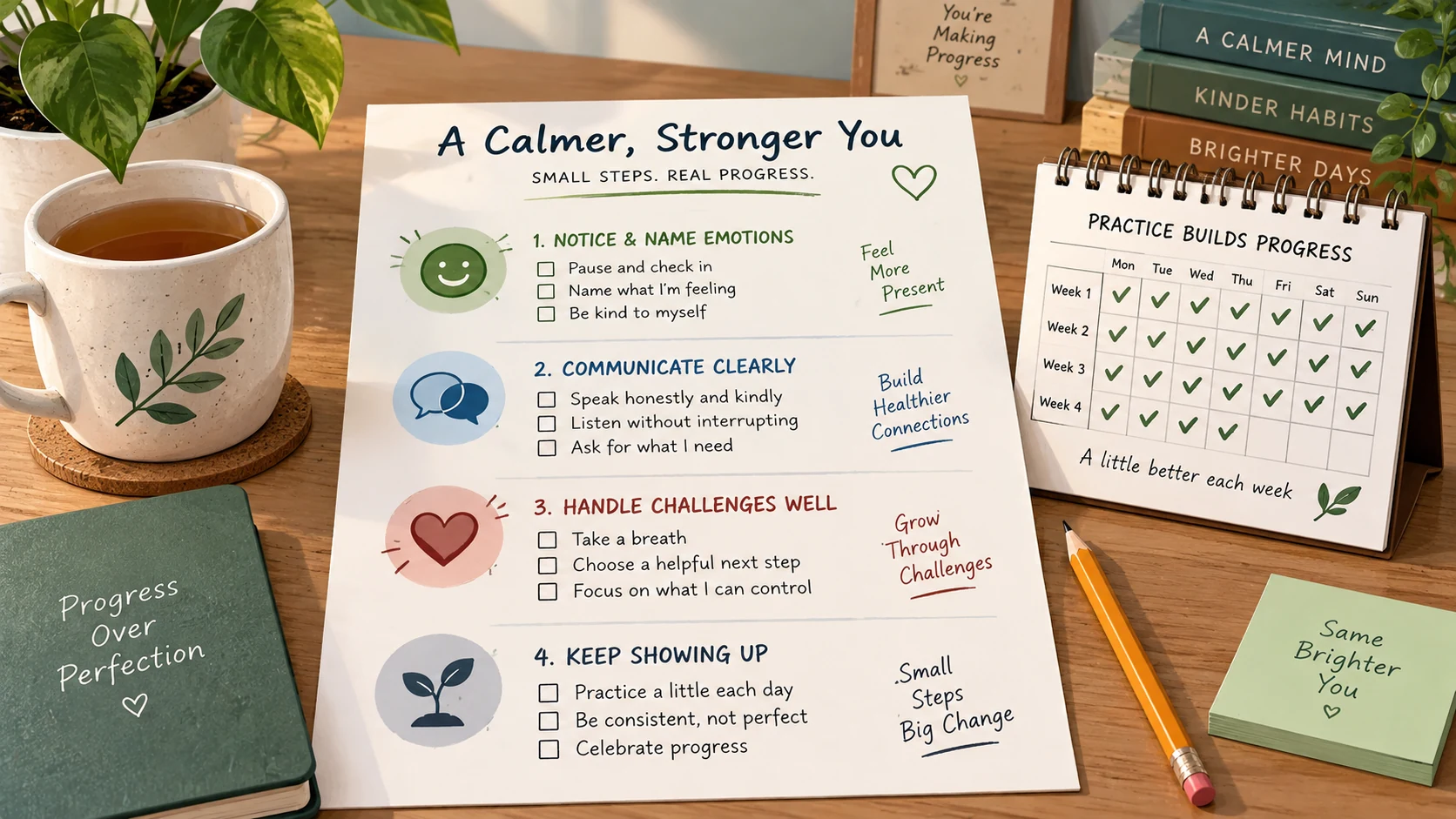
A simple weekly practice is to choose one skill and one situation. In a recurring meeting or family conversation, track tone, facial expression, pacing, and what is not being said. Afterward, write down one assumption and one better question for next time.
Wie man das Buch mit einem EQ-Test nutzt
Searches such as TalentSmart EQ test, emotional intelligence appraisal test, and emotional intelligence 2.0 code point to the book's assessment ecosystem. Readers should distinguish the book by Travis Bradberry and Jean Greaves, the publisher-linked access-code experience, and EQ-i 2.0 from Multi-Health Systems.
For everyday readers, the practical move is simple: read the book for language and strategy, use a self-reflection tool to notice current patterns, then practice one behavior for a few weeks.
Lohnt sich Emotional Intelligence 2.0 noch?
Yes, the book remains useful for readers who want practical EQ language and behavior prompts. It is strongest for people who prefer short strategies over dense theory, and for teams, managers, students, and coaches who want shared vocabulary.
The book has limits. Claims about EQ and performance should be read with healthy caution because emotional intelligence research includes different models, measures, and debates. It works best as a practice guide, not as the final word on psychology.
The New Emotional Intelligence is Bradberry's later update with new strategies, a newer assessment experience, and video-based learning support. The best use of any summary is action: choose one conversation, trigger, or listening habit, track it, reflect on it, and use an EQ-Reflexionstool für persönliches Wachstum if you want a low-pressure first step.
FAQ
Was misst EQ-i 2.0?
EQ-i 2.0 is a professional emotional intelligence assessment that measures emotional and social functioning, including self-perception, self-expression, relationships, decision making, and stress management. It is different from the book and from general online self-reflection tools.
Was ist emotionale Intelligenz in kurzer Zusammenfassung?
Emotional intelligence is the ability to notice emotions in yourself and others, understand what those emotions may mean, and use that awareness to guide behavior.
Ist Emotional Intelligence 2.0 ein gutes Buch?
It is a good book for readers who want practical strategies and simple language. It may feel too simplified for readers seeking academic depth, but it is useful as a starter guide.
Gibt es ein PDF von Emotional Intelligence 2.0?
Many people search for a PDF, but the safest route is to use legitimate book retailers, libraries, or authorized digital editions. A legal summary can help you decide whether to read the full book.
Was ist das Inhaltsverzeichnis von Emotional Intelligence 2.0?
The book is commonly understood around an introduction to EQ, the four skills, and many short strategies for practice. Exact table-of-contents details can vary by edition and format.
Welche Strategien zur sozialen Wahrnehmung nennt Emotional Intelligence 2.0?
The strategies include listening fully, observing nonverbal cues, noticing mood shifts, checking assumptions, and considering context before responding.
Was unterscheidet Emotional Intelligence 2.0 von The New Emotional Intelligence?
Emotional Intelligence 2.0 is the earlier book by Bradberry and Greaves. The New Emotional Intelligence is Bradberry's later update with refreshed strategies, a newer test experience, and additional learning support.